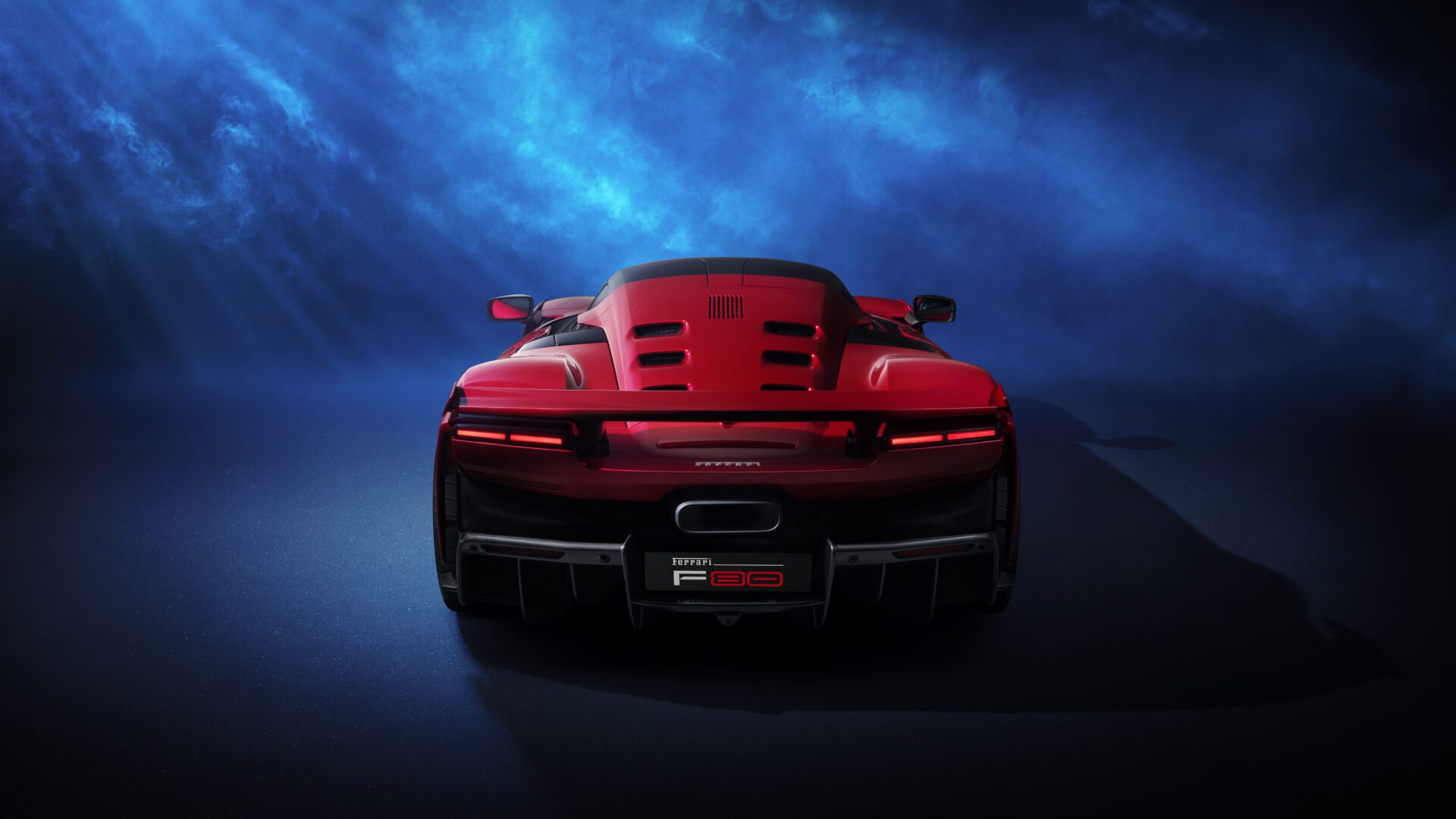
Since 1984, Ferrari has periodically released a new model representing the “pinnacle” of “cutting-edge” technology and innovation of its era. The (F114) GTO and (F120) F40 represented the 1980s; the (F130) F50, the ’90s; the (F140) Enzo, the 2000s; and the LaFerrari, the 2010s.
Introduced more than a decade ago (in 2013, to be precise), the LaFerrari is arguably one of the most iconic Prancing Horses of the 2010s. For Ferrari, the LaFerrari signified a new chapter in the Italian marque’s revered history. The F150, as it was internally known, was a masterpiece of engineering, with its HY-KERS powertrain, comprising a 6.3-litre V12 and electric motor, producing a peak power output of 708 kW.
When the LaFerrari bowed out (2016, coupé; 2018, Aperta), it was just a matter of time before the brand would unleash a Prancing Horse defining the current era. Well, now, the firm has, with Ferrari revealing the F80. Only 799 examples will be made.
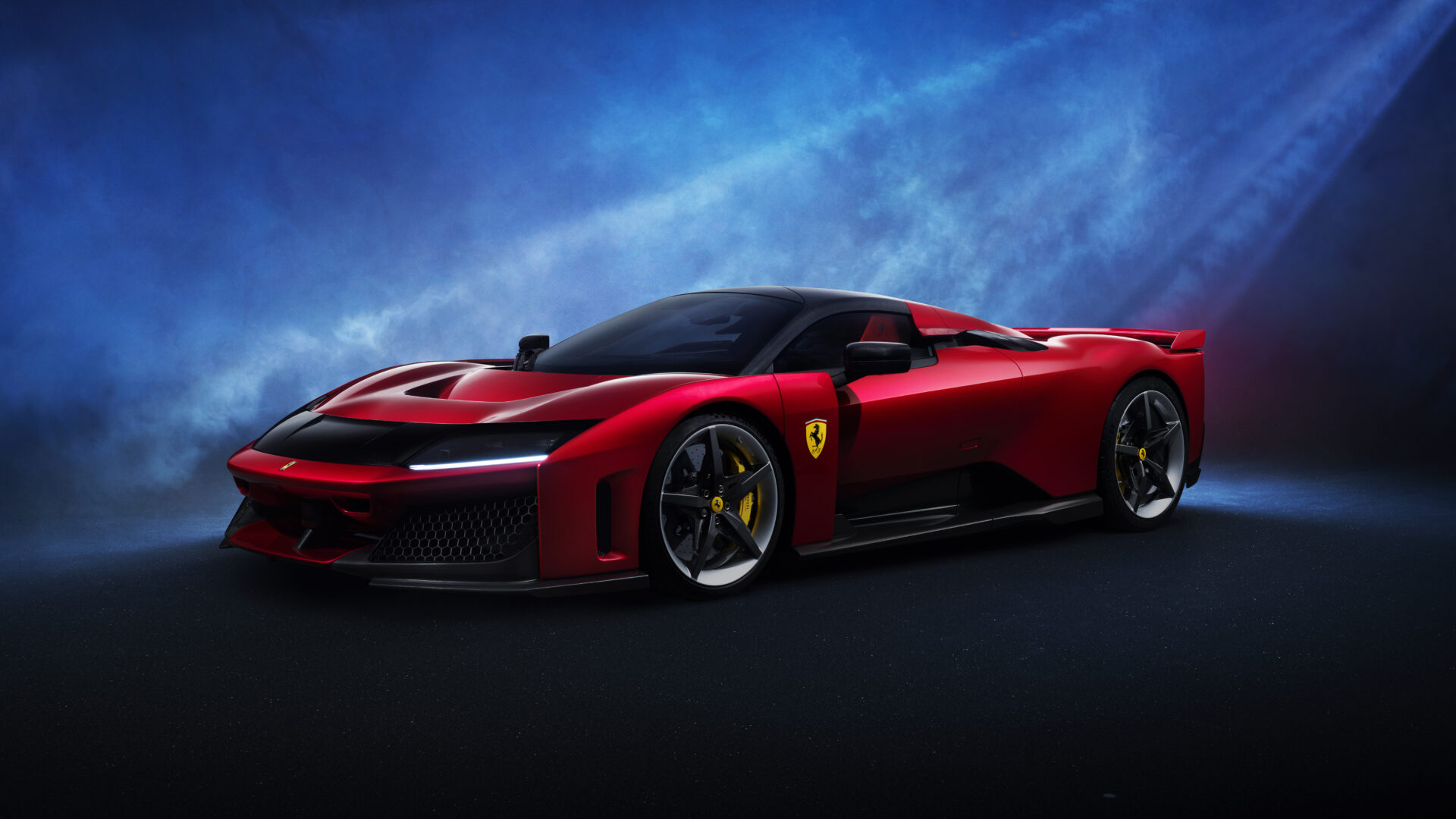
Billed as the most powerful road car ever produced by Ferrari, the F80 is endowed with a whopping 895 kW, sourced from a petrol-electric setup comprising a (671 kW) 3.0-litre twin-turbocharged V6 and three electric motors, with the two sited at the front producing 105 kW and the single unit sited at the rear producing 70 kW. Noteworthy, the 120-degree-mounted F163CF internal combustion unit spools to a whopping 9 200 r/min.
According to Ferrari, the immense power output produced by the F80’s hybrid configuration allows this all-paw Prancing Horse to sprint from the three-figure marker from a standstill in a whip-crack 2.15 seconds. In addition, it takes the 1 525 kg (dry) F80 to dispatch the 0-200 km/h sprint in only 5.75 seconds. The maximum speed is rated at 350 km/h.
However, it is not only the F80’s sheer acceleration that is impressive; the distances in which it decelerates is equally commendable — from 100-0 km/h and 200-0 km/h, the F80 is brought to a halt over 28 metres and 98 metres, respectively, thanks to a set of 408 mm fore and 390 mm aft brakes.