by Kelly Fisher
Volkswagen has a knack for filling gaps we didn’t know existed, and the new Tayron is the latest piece of that German puzzle. Effectively replacing the Tiguan Allspace, the Tayron slides into the line-up between the standard Tiguan and the flagship Touareg. It’s longer, wider, and a bit posher than the Tiguan it’s based on, aimed squarely at the family buyer who needs seven seats but isn’t quite ready for the full-fat luxury (or the price tag) of its bigger siblings.
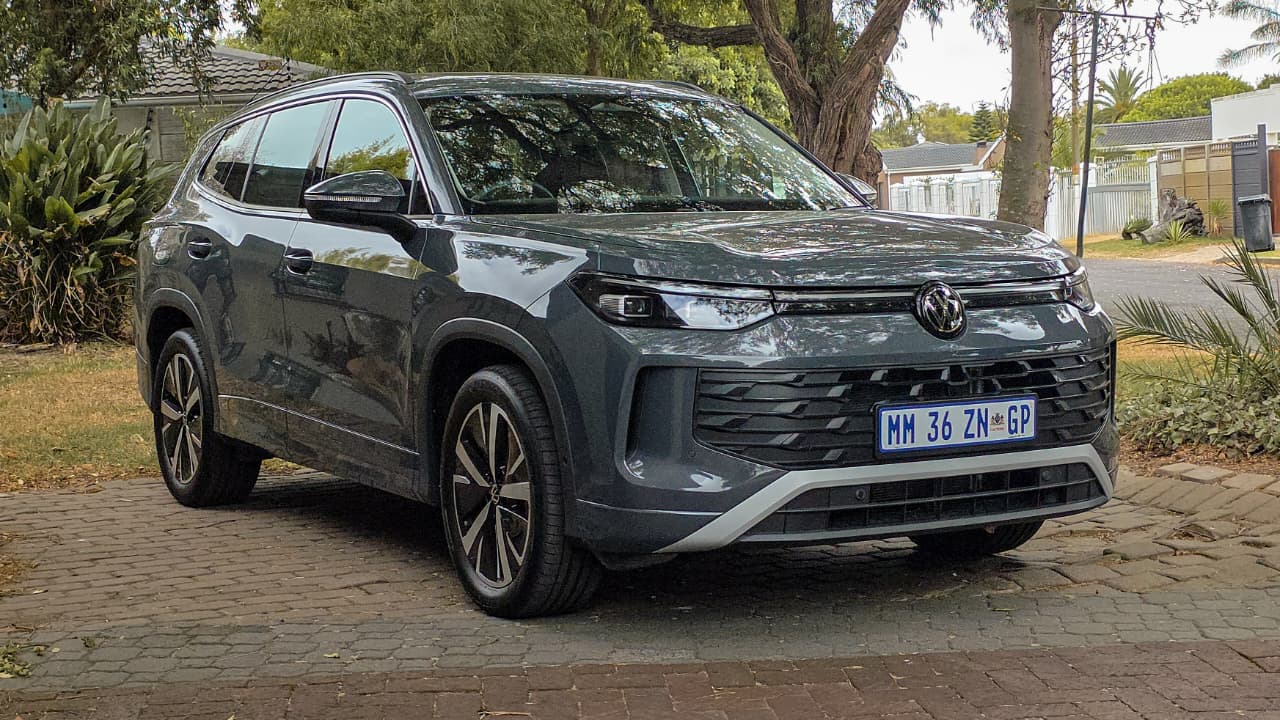
However, the Tayron’s role is about to get a lot more serious. With the Touareg expected to be phased out in several global markets around 2026–2027, the Tayron is widely tipped to step up as the brand’s flagship internal combustion SUV. It’s a big pair of boots to fill, but VW is betting on the Tayron’s blend of size and tech to keep the premium buyers interested.
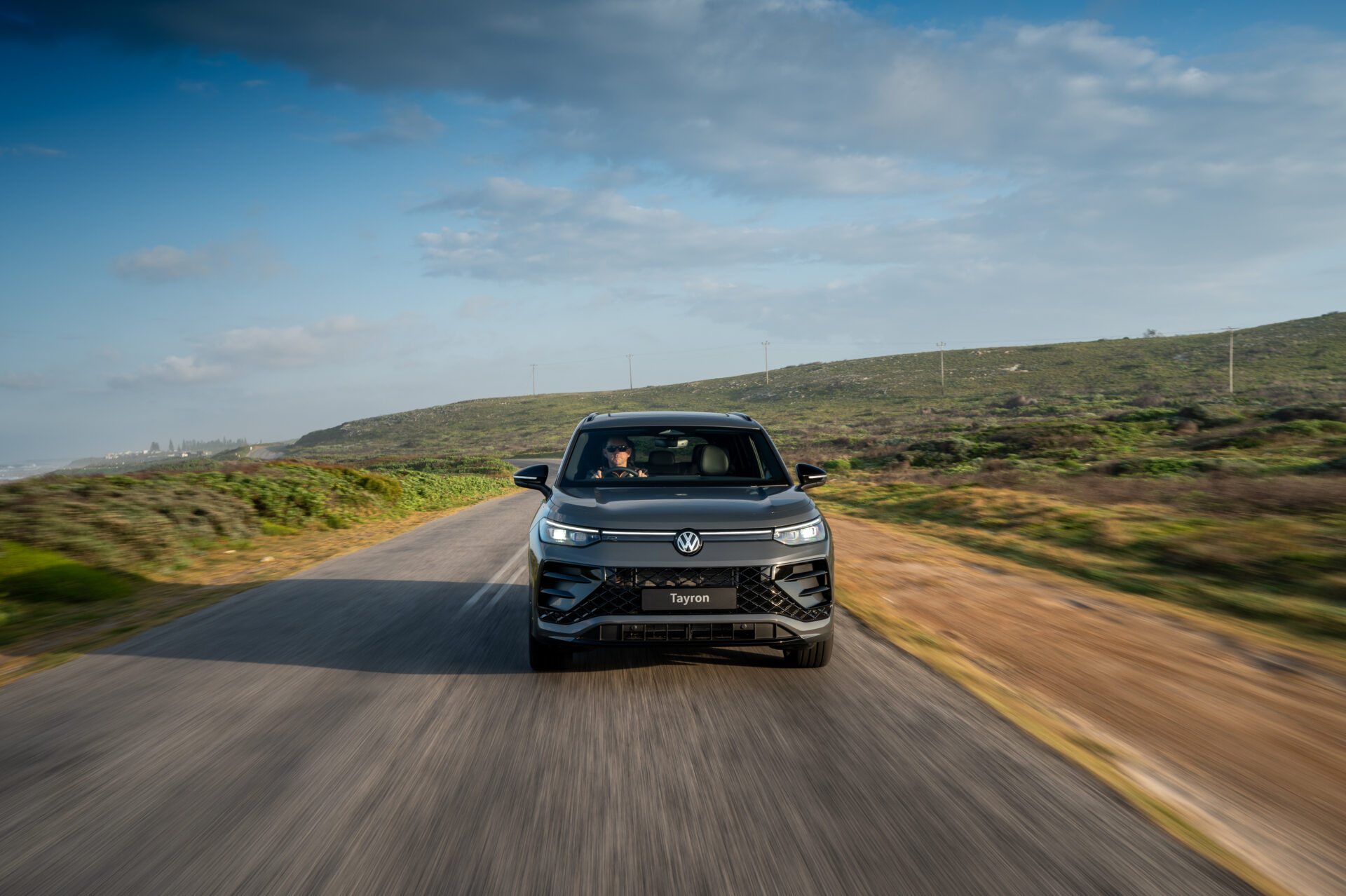
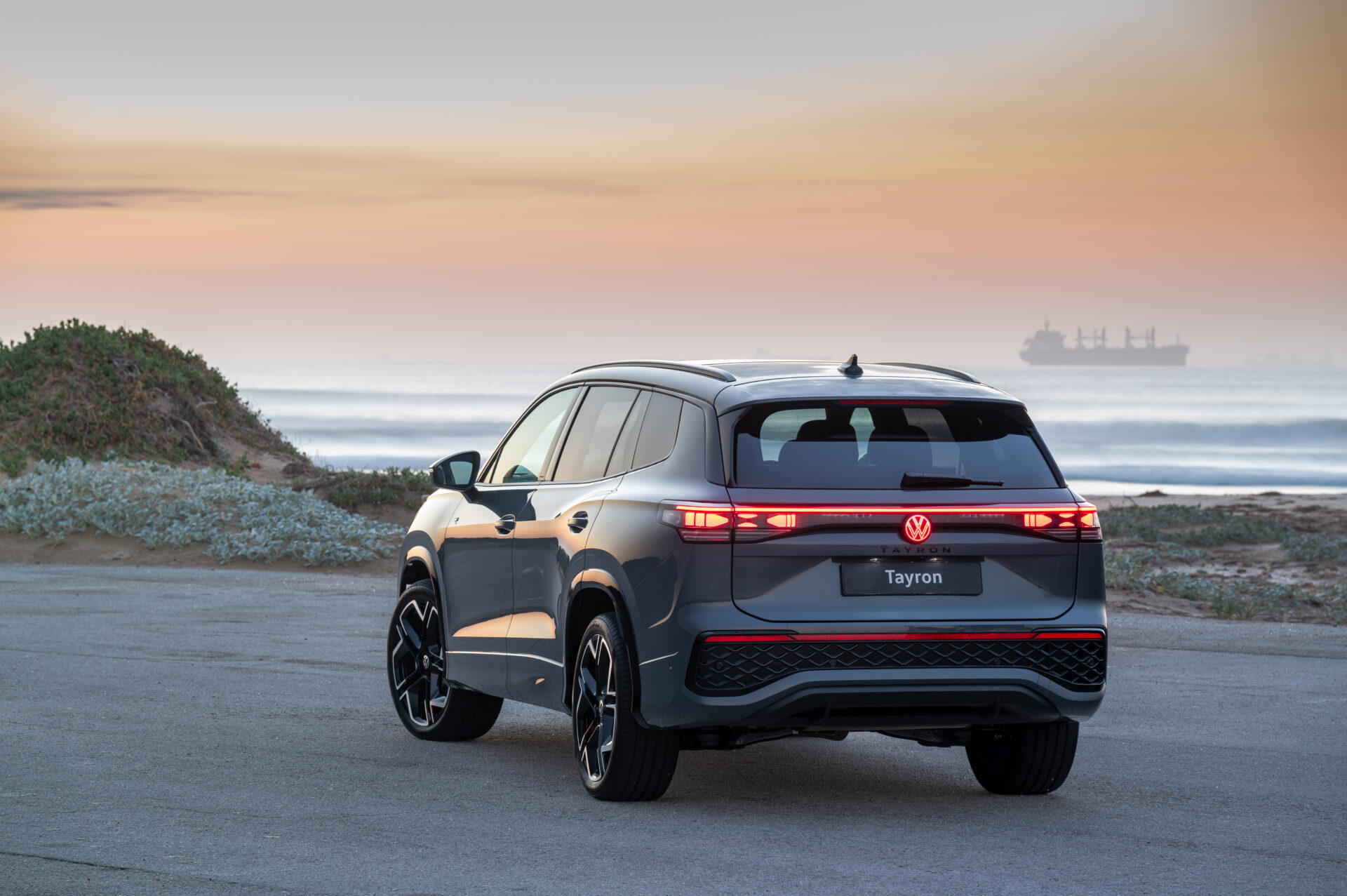
From the outside, it’s a handsome thing. It carries VW’s latest design language with confidence, such as cleaner lines, an illuminated logo, and a light bar that spans the rear. It looks more substantial than the Tiguan, and in R-Line trim, it has a certain “get-out-of-my-way” presence that South Africans tend to love.
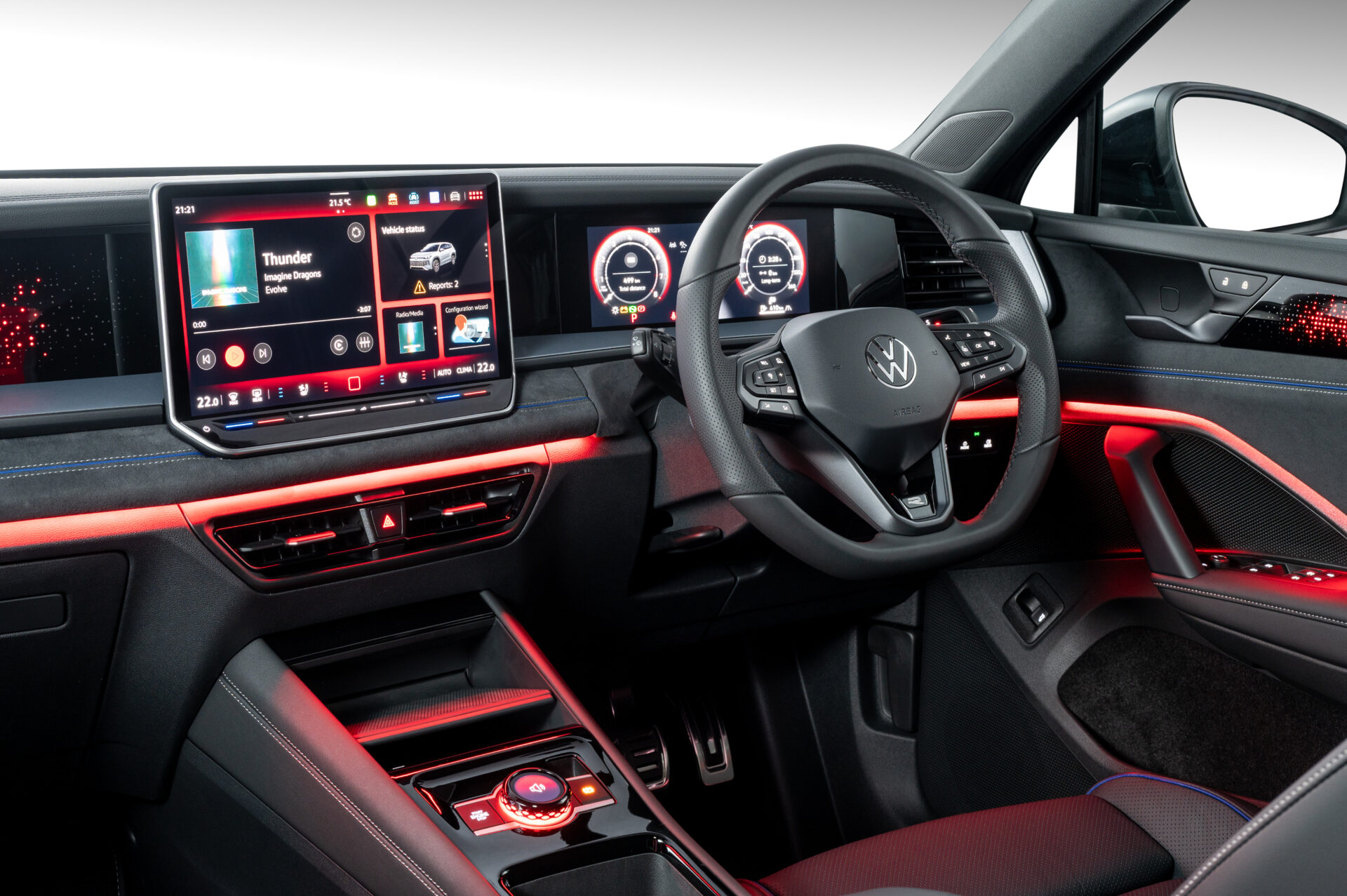
Step inside, and the “premium” marketing talk starts to make sense. The cabin is dominated by a massive 15-inch touchscreen that handles almost everything. While some might miss physical buttons for the climate control, the interface is slicker than previous efforts. Space is the Tayron’s trump card. With the second row slid back, legroom is cavernous. The third row? Well, like the Allspace before it, those pews are best reserved for the kids or your least favourite relatives on short trips.
The local range kicks off with the familiar 1.4 TSI engine, pushing 110kW and 250Nm through a 7-speed DSG. On the road, the Tayron feels more “long-distance cruiser” than “traffic-light racer.” It’s refined, quiet, and the suspension does a stellar job of soaking up the imperfections of our local tar.
However, there is a catch. The 1.4 TSI is a hard-working engine, but in a vehicle this size (which weighs roughly 240kg more than a Tiguan), it can feel a bit strained when fully loaded or during a brisk overtake. It’s competent, but you’ll find yourself wishing for more low-down grunt.
Pricing starts at R811,800 for the base 5-seater, climbing to R899,900 for the 7-seater R-Line. It’s a lot of money for a 1.4-litre SUV, but when you consider the tech and the sheer practicality, it’s easy to see why the Tayron will likely dominate the school run. It isn’t an enthusiast’s car, but as a tool for modern family life, it’s arguably the most sensible Volkswagen in the stable right now.
Also Consider
If you’re shopping in this bracket, the Tayron’s toughest fight isn’t coming from Germany, but from the East. The Kia Sorento remains the segment’s darling for those who value a punchy, fuel-efficient diesel engine, something the VW currently lacks locally. If you want more “shock and awe” from your tech, the Hyundai Santa Fe offers a radical design and a cabin that feels a generation ahead. Then there’s the value proposition of the Chery Tiggo 8 Pro Max, which will give you AWD, more power, and a ventilated-seat-level of luxury for significantly less cash. Of course, if you need actual off-road capability, the ladder-frame Toyota Fortuner is always lurking, though it lacks the Tayron’s polished road manners. Ultimately, if you want the most refined unibody experience and a badge that carries weight at the golf club, the VW is hard to beat, but definitely shop around, as this is a segment full of options.