A revered moniker, Ferrari has revived the ‘Testarossa’ nameplate for the modern era, with the Prancing Horse brand unveiling the 849 Testarossa.
Ah, the Testarossa — undoubtedly one of the most renowned models to come from the Prancing Horse brand’s stable. Indeed, since its introduction in 1984, the Testarossa has established itself as an icon in automotive history. Posters of this Ferrari have adorned the walls of many (the author of this article included) and, noteworthy, it has found a long-lasting place in pop culture (remember the white Testarossa driven by detective Sonny Crockett — played by Don Johnson — in the 1980s series Miami Vice?).
However, following a production run of 12 years, with around 10 000 examples produced, the ‘Testarossa’ nameplate was relegated to the annals of history. However, now, nearly three decades later, the Maranello marque has revived this moniker for the modern era with the unveiling of the 849 Testarossa.
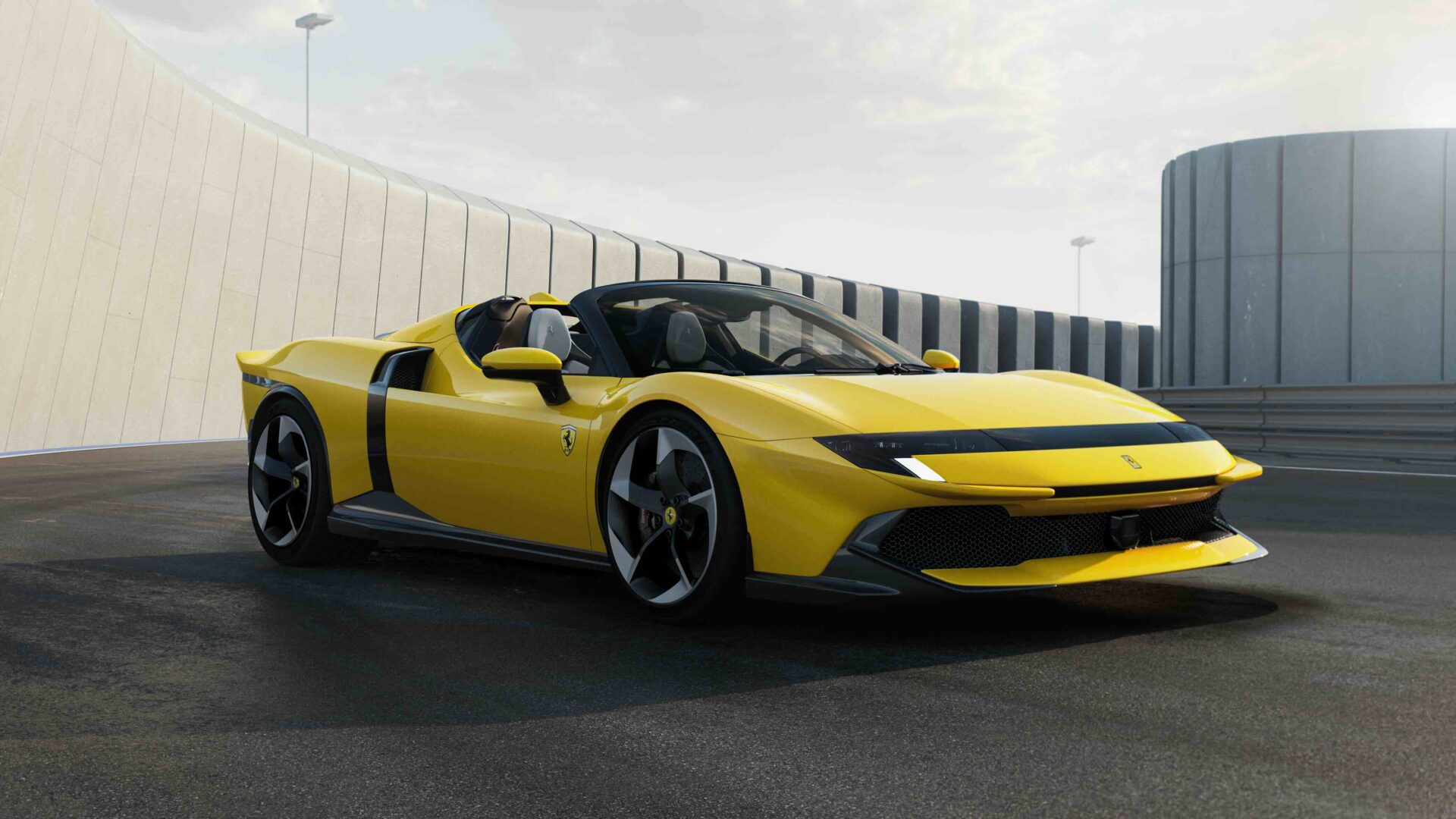
The 849 Testarossa is available in coupé and Spider format (the latter pictured here). The latest Ferrari to don the ‘Testarossa’ moniker is equipped with a plug-in hybrid (PHEV) powertrain that pairs a 610 kW/842 N.m 4.0-lite twin-turbocharged V8 internal combustion engine (ICE), which revs to a howling 8 300 r/min, with a trio of electric motors – the latter coupled with a 7.45 kWh high-voltage battery, which allows for an electric-only range of up to 25 km when fully charged. The e-motors add a combined 161 kW to the PHEV setup’s total system output; resulting in a combined peak power figure of 772 kW. The Italian automaker has yet to announce how much torque the 849 Testarossa’s plug-in hybrid setup produces.
According to Ferrari, this figure allows the modern Testarossa to sprint from 0-100 km/h in less than 2.3 seconds, with the (1 570 kg, dry) fixed-roof model breaching the 200 km/h marker 4.05 seconds later, at 6.35 seconds, and the (1 660 kg, dry) Spider variant arriving at the two-tonne slightly later, at 6.5 seconds. The top speed of both models is rated at “over” 330 km/h.