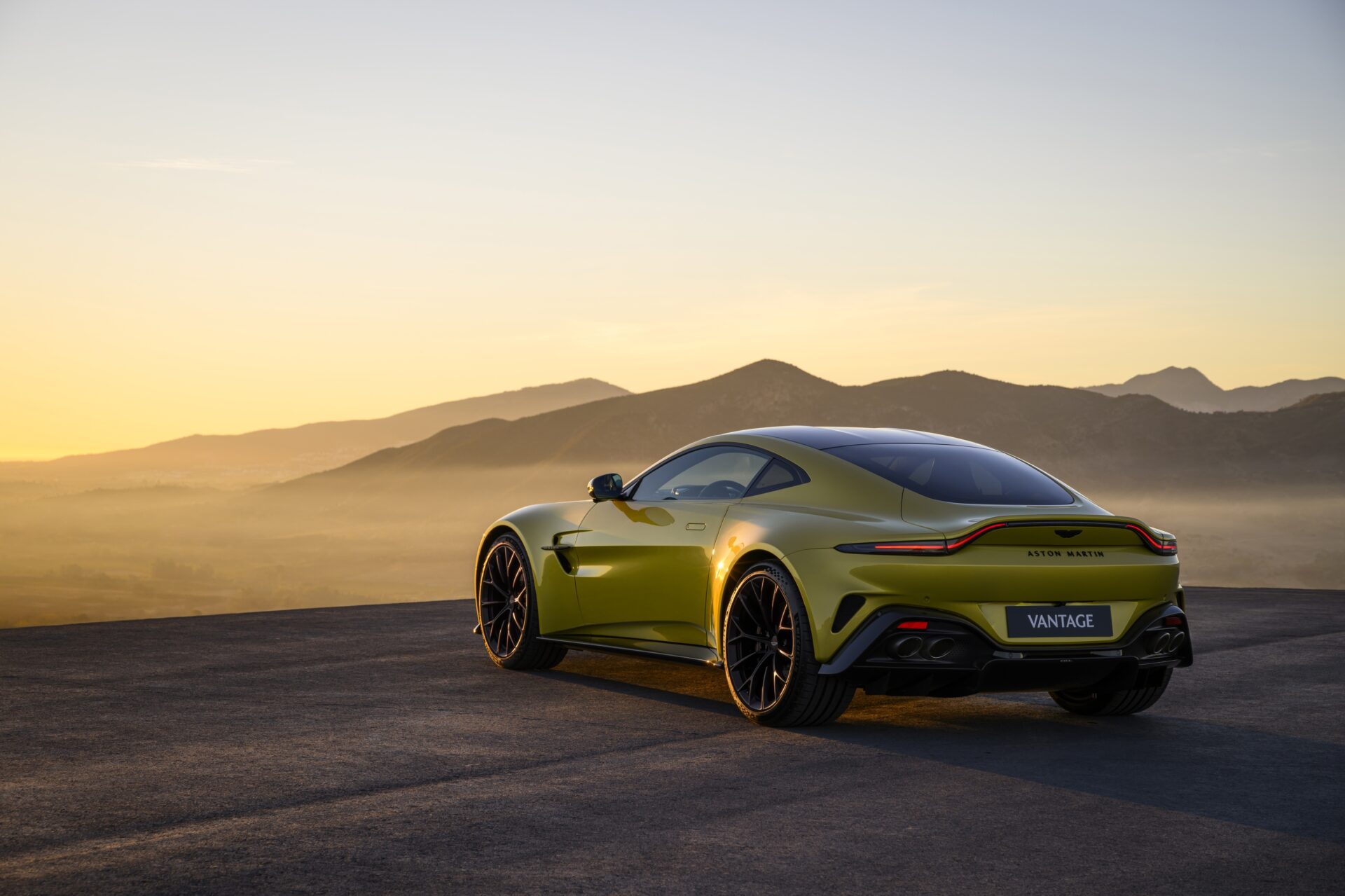
The current-generation Vantage is arguably one of the most beautifully sculpted sports cars Aston Martin has ever created. It’s an exquisite piece of machinery, inside and out … and then there is the bellowing V8 heart that beats below its chiseled bonnet. It’s a commendable package.
Did it need more? Arguably no. However, it seems the British marque thought so. Indeed, Aston Martin has handed the Vantage a host of exterior and interior upgrades. But if you thought that’s all, you’d be mistaken. The firm has fettled with its 4.0-litre powertrain, lifting its power and torque outputs to new heights.
So let’s take a closer look at what the Gaydon-based brand bills as the quintessential Aston Martin sports car and most driver-focused model ever to bear the Vantage moniker. Sounds promising? It is.

The most significant highlight of the revised Vantage is what the carmaker has achieved with its powertrain. The Mercedes-AMG-sourced, 4.0-litre unit has been handed power and torque increases of around 112 kW and 115 Nm.
The result? Peak power and torque outputs of 489 kW and a DB12-matching 800 Nm. That’s immense, especially when you consider the former is only 5 kW less than the DB12 super-tourer.
So, how has Aston Martin achieved this? Well, the company’s engineers have extensively tuned the twin-turbocharged engine, which now adopts modified cam profiles, “optimised” compression ratios, larger turbos, and enhanced cooling. According to the manufacturer, this has also resulted in a “sharper”, “more visceral” and “more vocal” character.
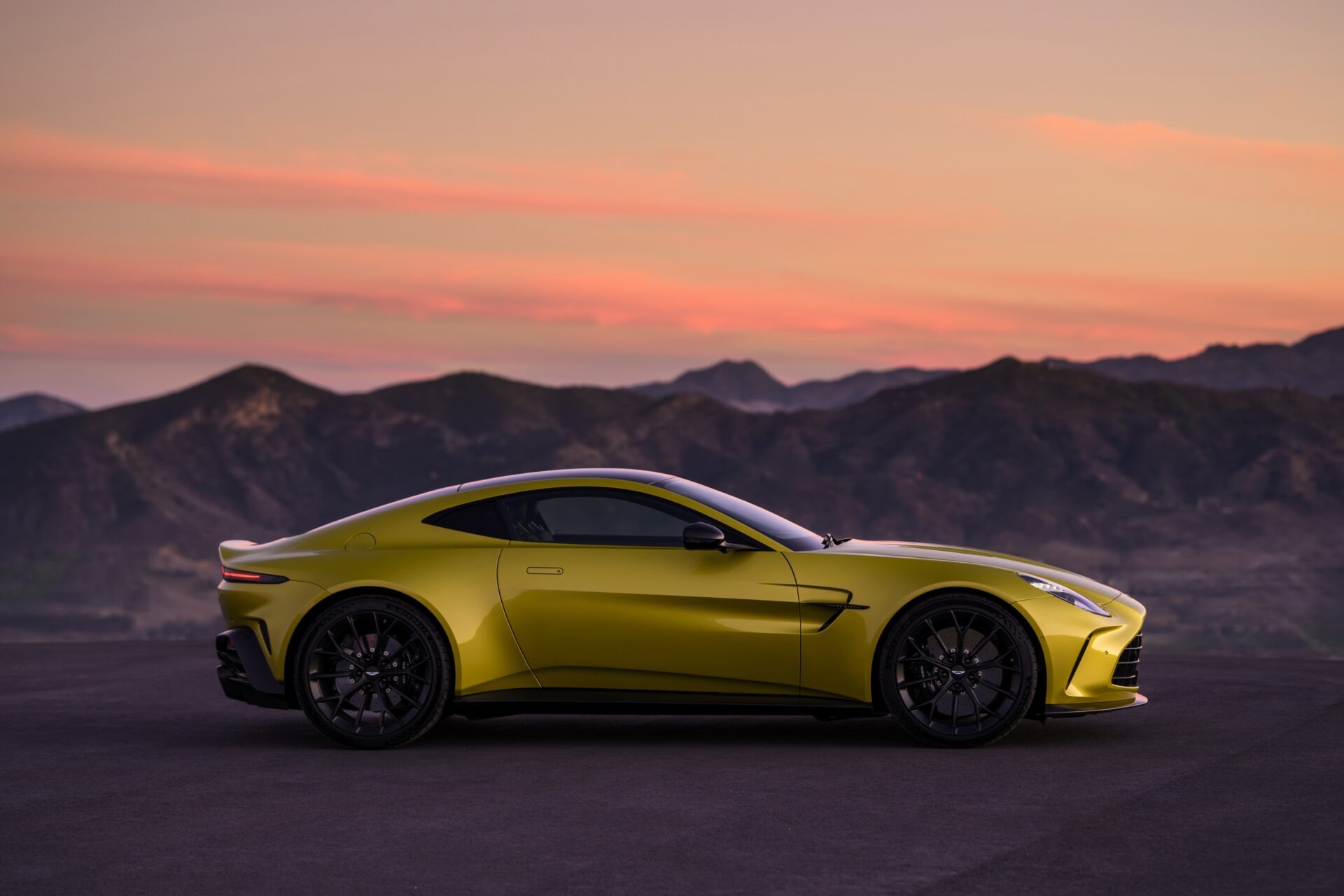
Sending power exclusively to the rear axle via an eight-speed ZF automatic transmission, the updated Vantage dispatches the 0-100 km/h sprint in a claimed 3.4 seconds. That’s two-tenths-of-a-second quicker than the pre-facelifted Vantage (and the DB12, for that matter). Then there’s the top speed. The revised Vantage maxes out at 325 km/h (11 km/h more than the pre-updated model).
Stopping power is provided by cast-iron, 400 mm front and 360 mm rear brake discs, housed in 21-inch forged alloy wheels. The latter is wrapped in 275/35- and 325/30-size rubber, replete with a bespoke compound.