It looks stunning, doesn’t it? Of course, looks are, admittedly, subjective. There’s no empirical manner in which to determine whether a motor car is beautiful or not. Some are the cause of lively debate, such as the current-generation BMW M3/M4). However, there are some that enthusiasts have agreed upon are works of art. The Alfa Romeo 33 Stradale of the 1960s comes the mind.
But we digress. The concept sports car seen here might, admittedly, not be regarded as “beautiful”, per se. Well, some might think so, and some might not. Beauty is, indeed, subjective. However, it is striking. There is no doubt about that.

Sporting pencil-sharp exterior design lines, the Toyota FT-Se previews a future sports car from the Japanese automotive giant. But what’s more, unlike the company’s currently available thrilling performance cars, such as the GR Yaris, the FT-Se goes without an internal combustion engine. Indeed, it’s powered by electric wizardry.
The FT-Se concept was designed to showcase Toyota’s potential of producing zero-emissions, high-performance sports cars in the future. Indeed, that’s what this concept’s name stands for — “Future Toyota Sports electric”, or FT-Se for short.
The FT-Se incorporates the expertise gained from Toyota Gazoo Racing’s efforts to build “ever-better” cars through its participation in the motorsport arena. According to the firm, the FT-Se presents a vision of how a driver’s relationship with their vehicles will evolve and deepen.
Endowed with “next-generation” battery technology, the FT-Se’s all-electric powertrain “pushes the boundaries of performance”, Toyota says.
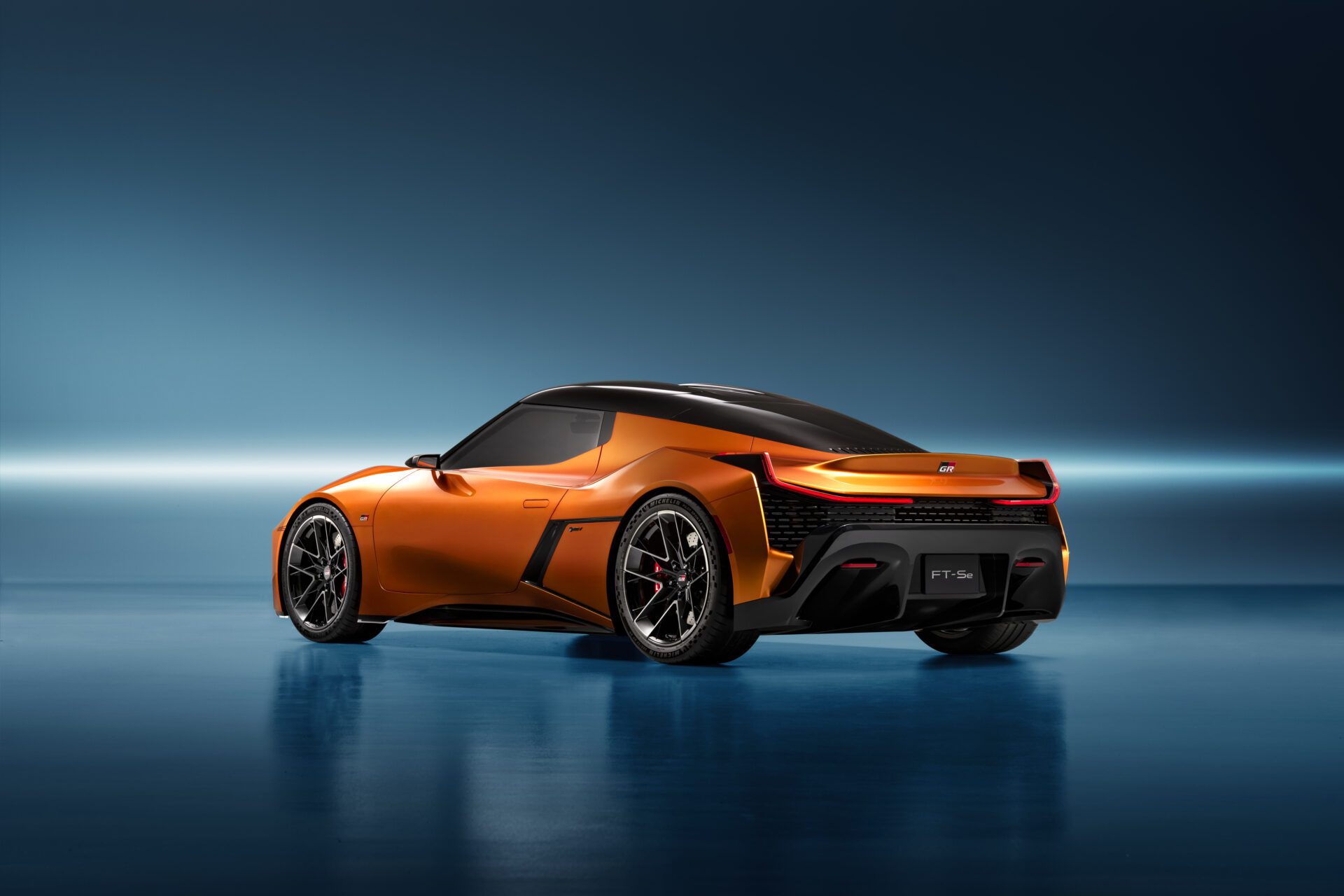
The two-seater measures a mere 1 220 mm in height, with the width and length coming in at 1 895 mm and 4 380 mm, respectively. To give you an idea of how large the emissions-free concept sports car is, let’s compare it to the GR86. The FT-Se is around 100 mm longer and wider. However, its height is around 100 mm less.
But what about the interior? The FT-Se’s cockpit is driver-centric. It features a digital instrument panel, sited lower down to ensure enhanced outward visibility, and a “yoke”. There are even “newly designed” kneepads to protect the driver and passenger from G-forces during track driving.