Fourteen years. That’s how long the sixth-generation Nissan Patrol has been on duty as the flagship offering in Nissan’s SUV portfolio. But before we continue, here’s an interesting fact: that’s the same amount of time the previous generation of its arch rival, the Toyota Land Cruiser, was on sale, before bowing out to make way for the venerable Land Cruiser 300.
However, the time has now come for the current Patrol to make way for its successor, the brand-new, seventh iteration, which, completely overhauled, has its sights firmly set on dominating the luxury-SUV segment. It has it work cut out for it, though. Yet, the new Patrol seems promising.
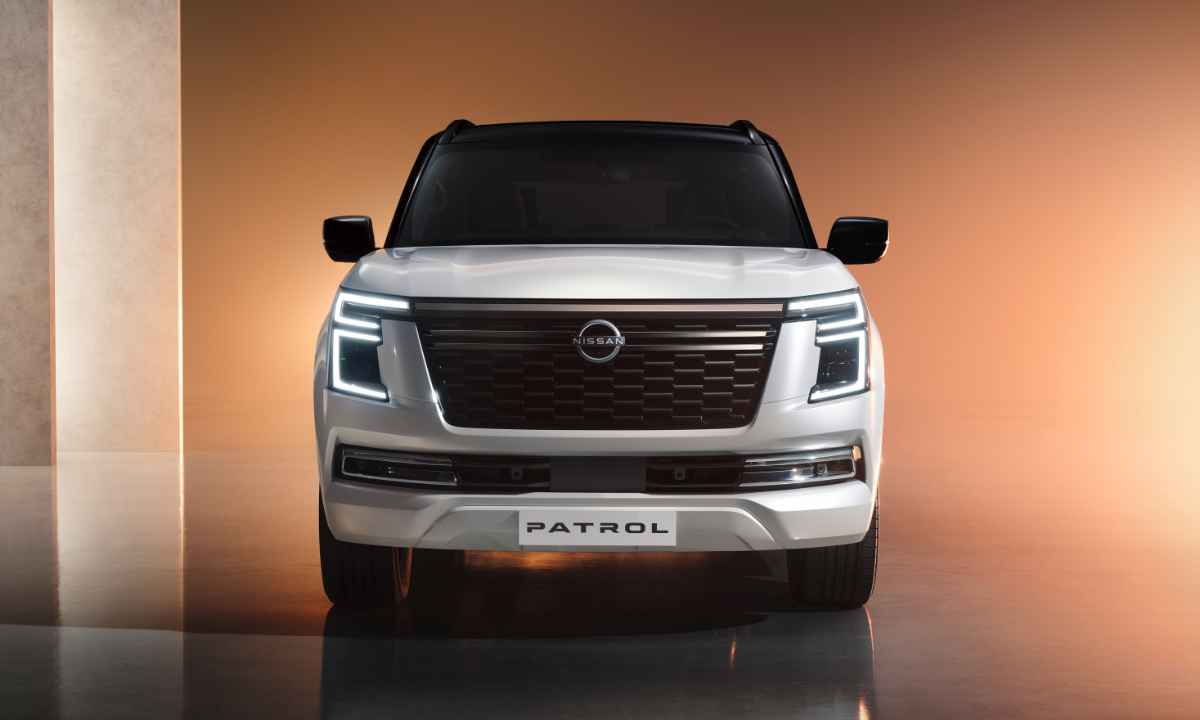
So, what can you expect from the latest Patrol? Well, for starters (and most significantly), the Patrol has bid farewell to the 5.6-litre, naturally aspirated V8 employed by its predecessor. Indeed, the new Patrol will be available with the choice of two V6 engine options, one of which equipped with breathing apparatus. Yup, the Patrol has not only dropped a duo of cylinders, but has gained forced induction in the form of turbocharging.
The new 3.5-litre, twin-turbocharged V6 produces 317 kW and 700 N.m of torque, making the variant equipped with this engine option (another is available, too, but we’ll get to that soon), the most powerful series-production Patrol ever produced by the Japanese automaker. Compared to the outgoing model’s 298 kW and 560 N.m, that’s 19 kW and 140 N.m more. In addition, instead of transferring power and torque to the front and rear axle via a seven-speed automatic transmission, which is found in the current Patrol, the new model’s self-shifter has gained an additional two cogs.
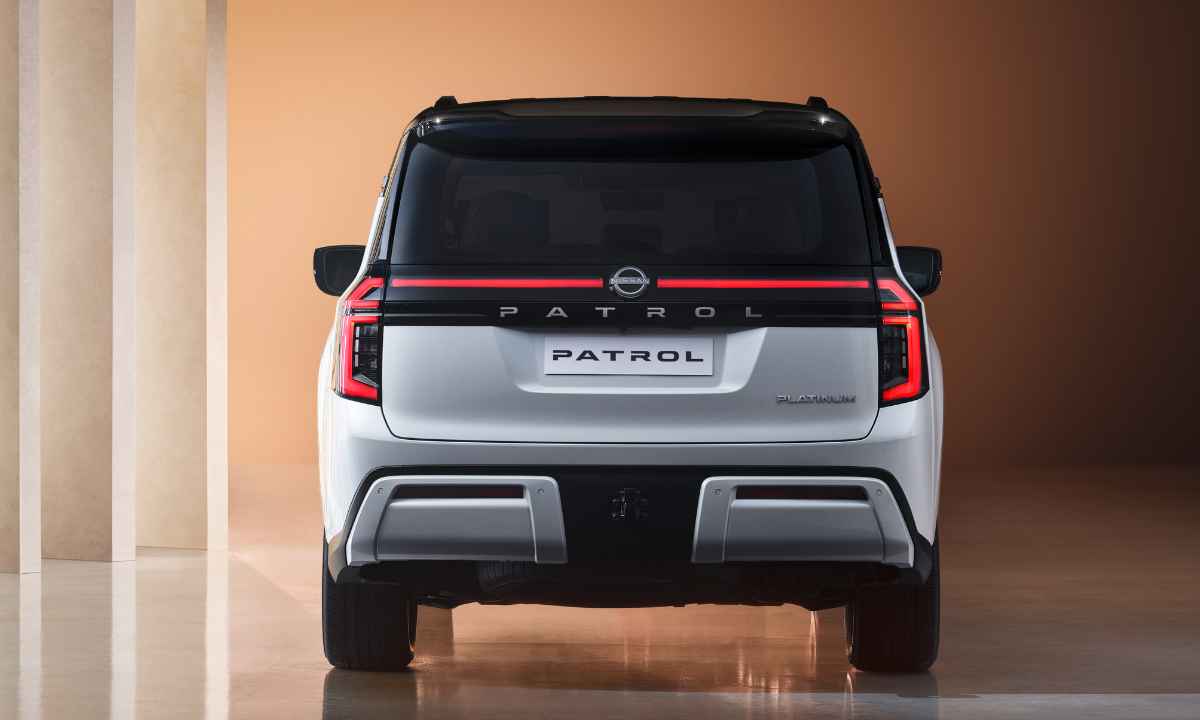
Performance and fuel consumption figures are yet to be released, though, but we expect the twin-turbo Patrol to be quicker in a straight line and, most notably, more economical at the pumps (as a reminder, the previous iteration has a claimed average fuel consumption figure of 14.4 L/100 km).
However, as mentioned, the turbocharged V6 won’t be the only powertrain on offer. The new Patrol will also be available with a 3.8-litre, naturally aspirated V6, which produces 236 kW and 386 N.m of torque. Like the twin-turbo V6, this petrol unit is coupled with a nine-speed automatic cog swapper.