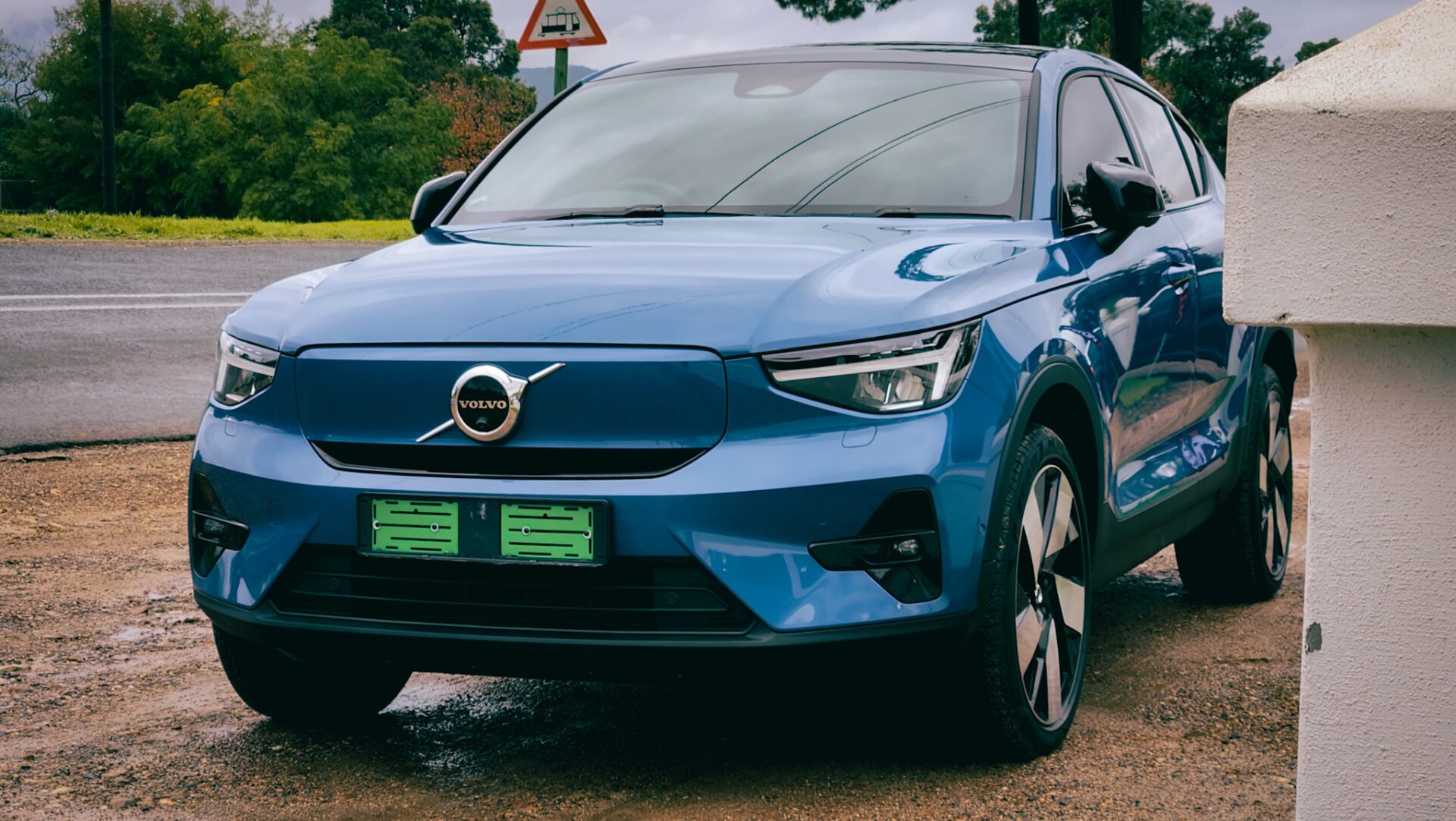
Despite arriving on a cold and miserable Franschhoek, my cockles had been warmed by the prospect of piloting the all-electric Volvo C40 Recharge. It has a twin electric motor setup, one on each axle thus endowing it with all-wheel drive, perfect for the winding roads of the Western Cape, especially in these slippery conditions. The car’s regenerative braking system, which helps to slow the car down and recharge the battery, would also prove paramount in keeping the svelte blue compact SUV on the tarmac. I was thrilled.
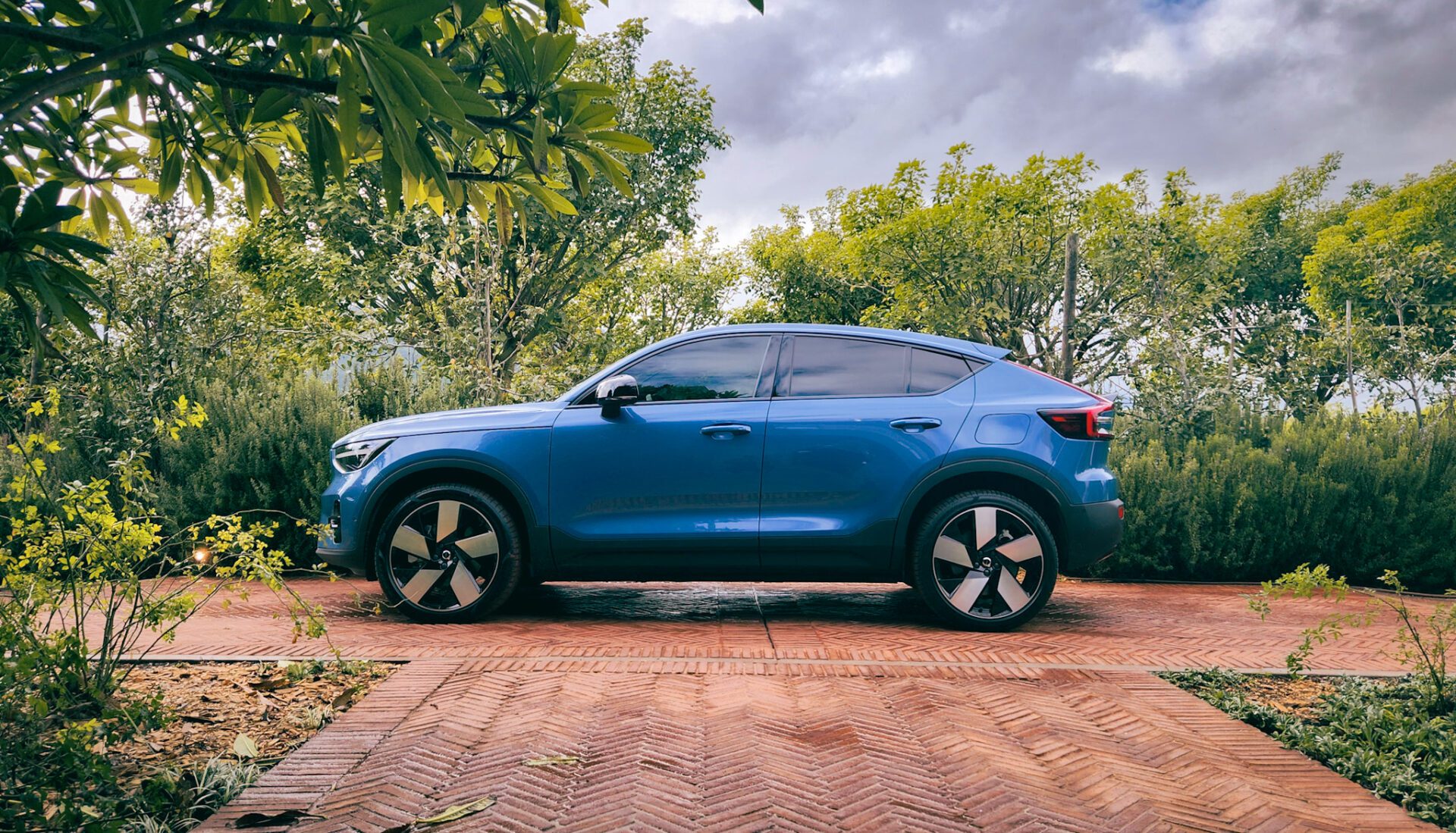
See, I’m one of the lucky few to sample it for first time on local South African roads. That meant experiencing its 78kWh battery (one of the largest in its class) capable of a 444km range. It boasts a 300kW payload and 600Nm of torque in reserve, resulting in a spirited 0-100km/h in just 4.7 seconds. Its 150kW max charging speed is also super impressive, able to charge 10% to 80% in just 37 minutes. And if all of that has caught your attention, you can buy it online (only) for R1 285 000. We live in a country where electric cars command luxury car prices. At least with the C40, it feels properly premium too. For context, it plays rivals such as the Mercedes-Benz EQA and EQB, also the incoming BMW iX1 and to a lesser extent, the far pricier (and larger) Audi e-tron SUV. We’re at an intersection where the biggest defining feature or a brand will be the styling and cabin, now that fossil-burning engines have been relegated.
BUT WAIT, THERE’S MORE
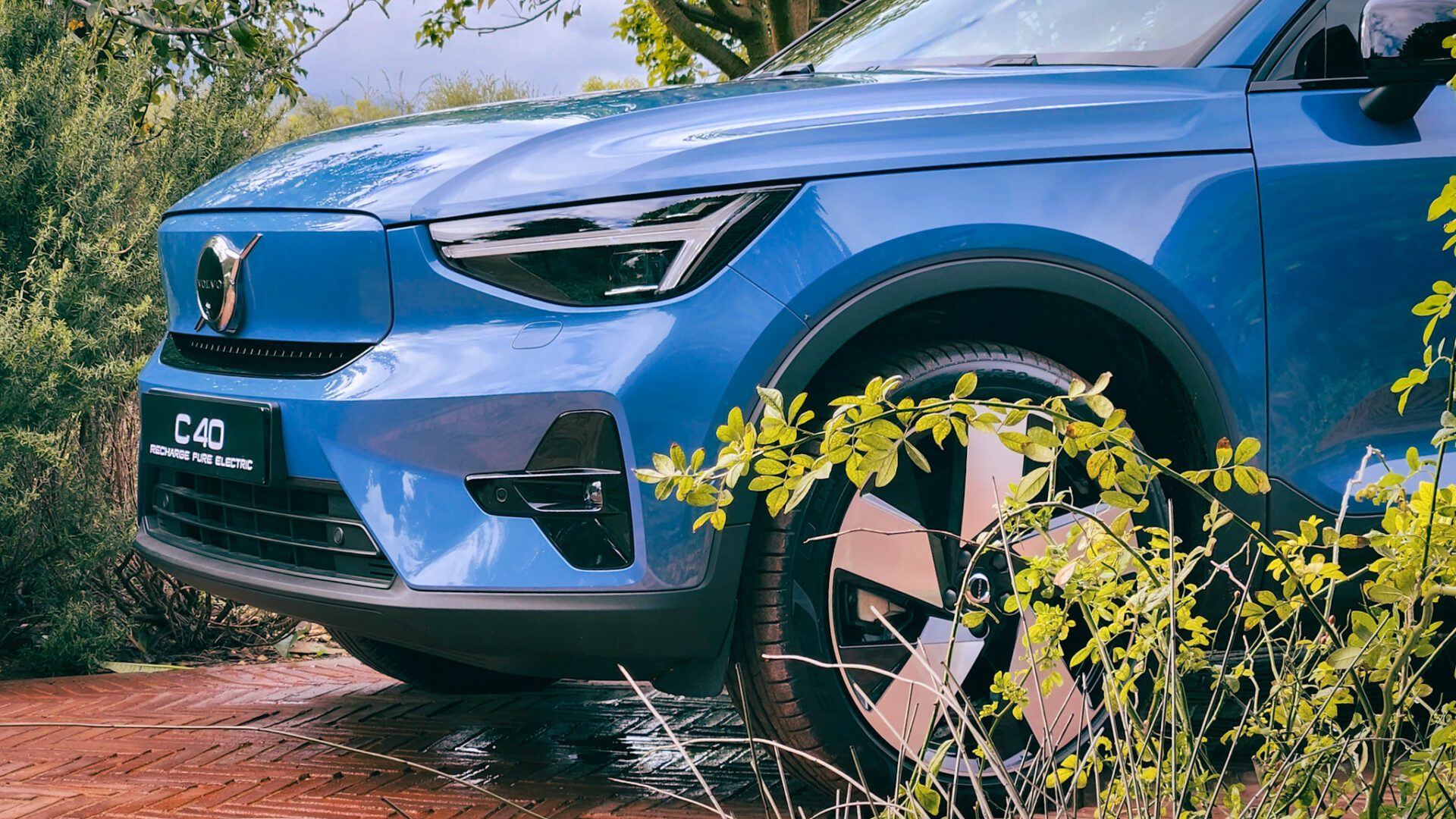
My test unit features the optional something called Pixels Headlamp technology – groovy tech comprising of 84 pixels, essentially smart beams that poke between the gaps of oncoming cars so as not to blind their drivers. Around the back, vertical lamps ascend the Coupe’s slope, to complete the dazzling package. Also, the C40 Recharge features nifty functional aero resulting in a slippery profile, the length of which is covered with a glass roof. As the rain intensifies against the glass and steel, I’m reminded of the old Volvo ethos of ‘warm inside, cold outside’ and I’m grateful for modern conveniences like climate control.
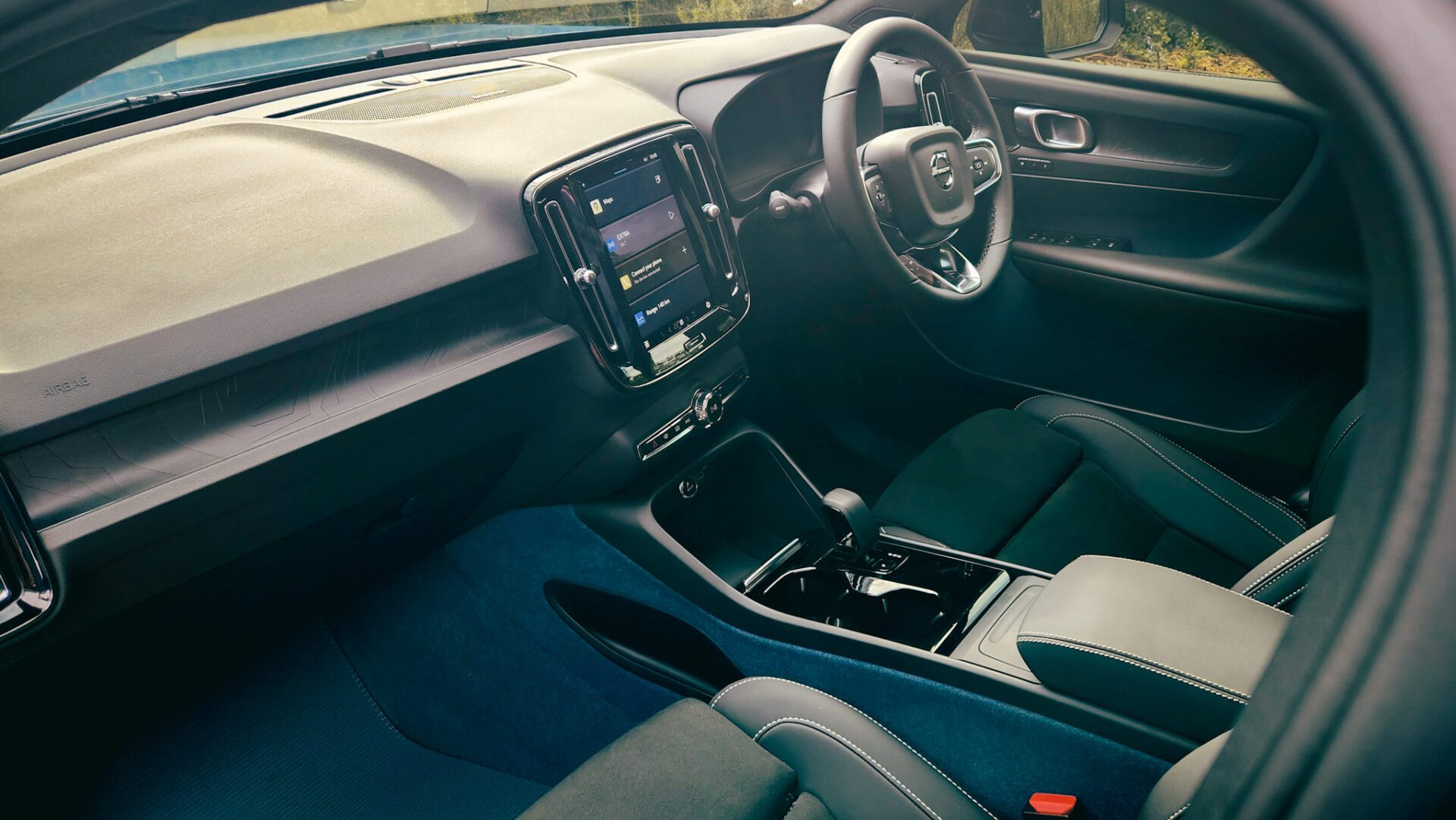
It’s a wholly leather-free cabin, instead mine had blue high-quality sustainable upholstery and fabric. The dash and door inners comprised of LED-backlit topographical decor, for a calming aesthetic. The Harman/Kardon sound system is mega, and there is an array of clever storage, hidey-holes and bins to make use of. The infotainment brain is powered by Google Automotive System, enabling hands-free calls, performing digital assistant duty and of course maps and more. The instrument cluster moods are hot-swappable to Calm, Navigation or simply Car mode, with relevant subject matter displayed at your convenience.
A VERDICT OF SORTS
There’s even more of course, such as the three charging modes. the ‘over the air’ software updates, raft of tech, safety and other. But ultimately, it’s the job of being a car, that I’m most qualified to answer, and to that end I can say this. Volvo makes fantastic cars, whether they run on petrol, diesel, reindeer dust or electrification. This is a trend they’re continuing here with a stylish car that handles well, goes like a rocket and is comfortable the entire time. Now say something negative? Err, the ride’s a bit firm I guess, and shaving R100,000 off the sticker price can only help sell a car that deserves to sell well. But we live in Mzansi, where forward-thinking is punished and taxed, and where the infrastructure is a perennial work in progress. So the price is the price, but if it makes you feel any better, I reckon it’s worth it.