The Toyota GR Yaris has to be one of the most thrilling hot hatchbacks of recent years. It’s a sure-fire pocket rocket providing oodles of fun, whether it’s in a straight line or, especially, the bends.
Now, Toyota has handed the GR Yaris a host of updates, outside and in, and, most significantly, under the bonnet. Yup, the 2024 model has thoroughly “evolved”. So, let’s dive into the highlights of the upgraded derivative.
Before we get to the cosmetic and interior enhancements, let’s take a look at what’s arguably the most talked about point about the facelifted version — its uprated engine and the addition of a new gearbox. A new transmission, you ask? Indeed. But we’ll get to that in a few. Let’s take a glance under the bonnet.
The GR Yaris, which we sampled on the local launch back in 2021, is powered by a punchy 1.6-litre turbo-triple. When introduced, this petrol engine was the most powerful three-cylinder ever produced. It churned out 200 kW and 370 Nm of torque. Of course, in South Africa, the powertrain was detuned to the, ahem, tune of 2 kW and 10 Nm. Yup, the model currently available in SA directs 198 kW and 360 Nm to all four corners via a six-speed manual transmission (again, we’ll get to the upgraded model’s gearbox soon).
However, for the 2024-model-year model, the Japanese automaker has uprated the GR Yaris’ engine to 224 kW and 400 Nm. That’s 3 kW and 30 Nm more than the GR Yaris’ larger sibling, the GR Corolla.
So, let’s get to the gearbox (finally). The “evolved” GR Yaris is available with a “newly developed” eight-speed Gazoo Racing Direct Automatic Transmission. Although the six-speed manual cog-swapper was slick in its workings, the new unit is sure to provide an even better in-traffic driving experience, making this hot hatch more usable day-to-day.
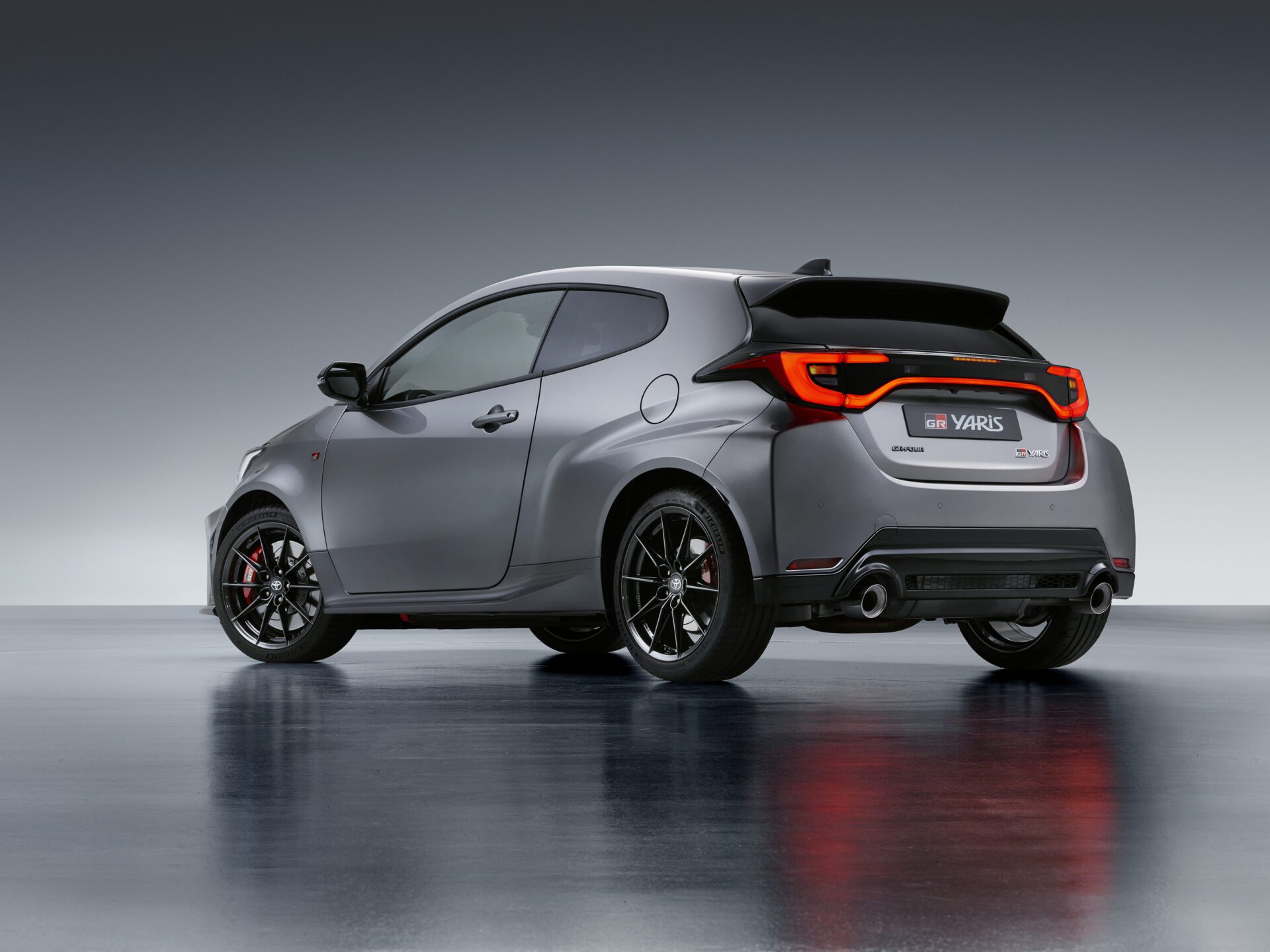
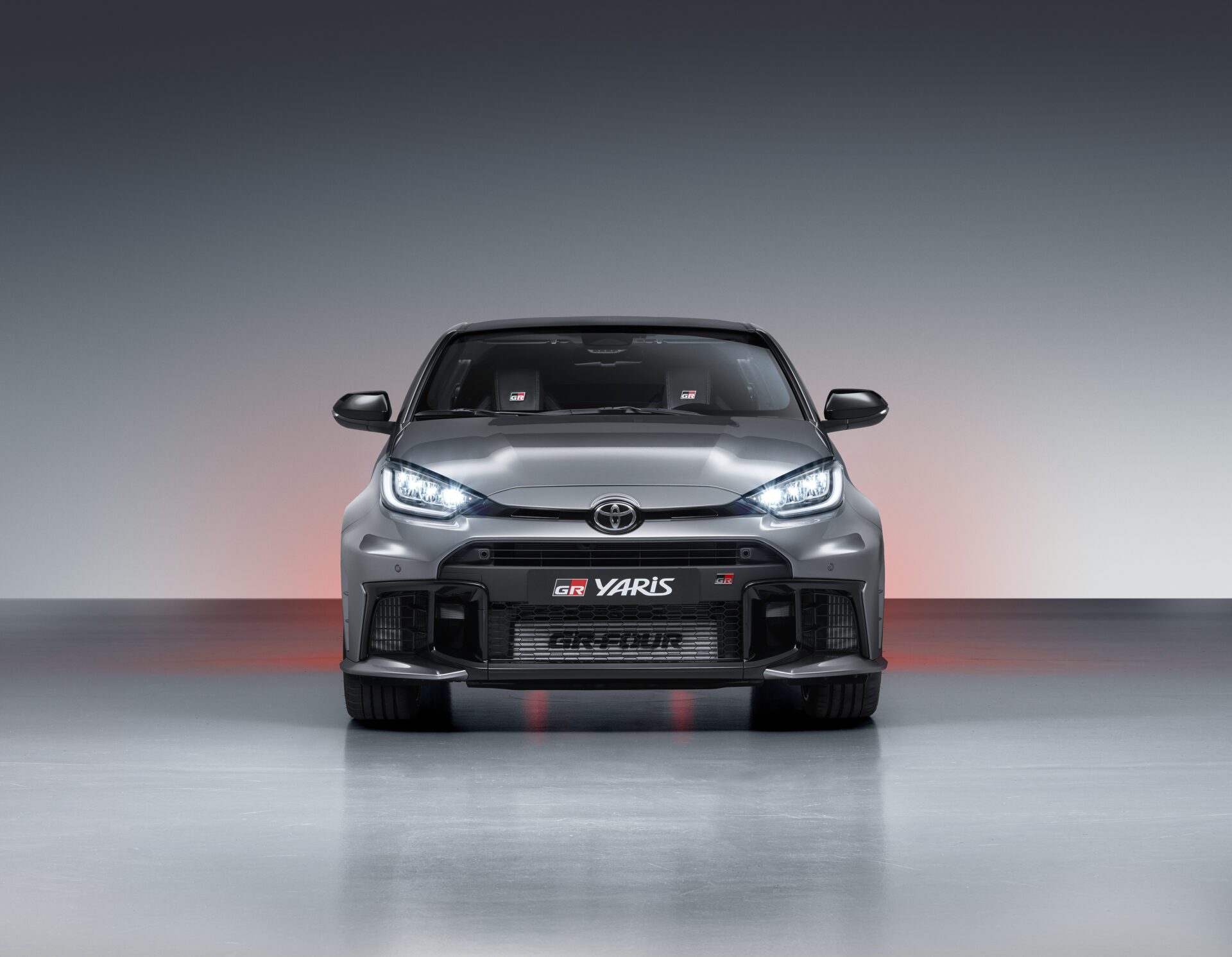
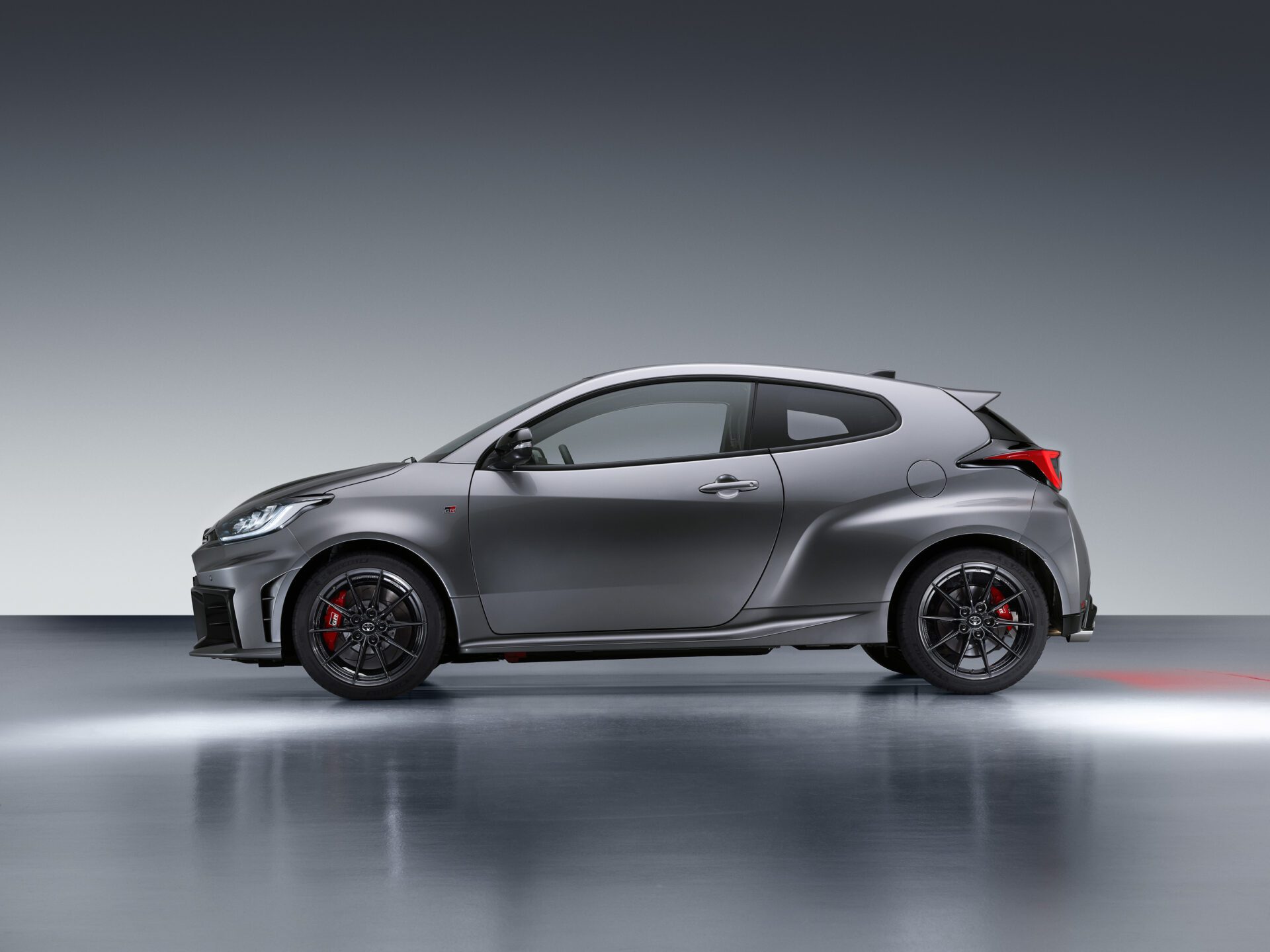
Let’s take a (virtual) walk around the exterior. What has changed? Well, the lower grille has been revised and the side lower grilles feature larger openings for enhanced engine cooling. ‘Round back, an LED light strip spans the tailgate, connecting the rear lamps.
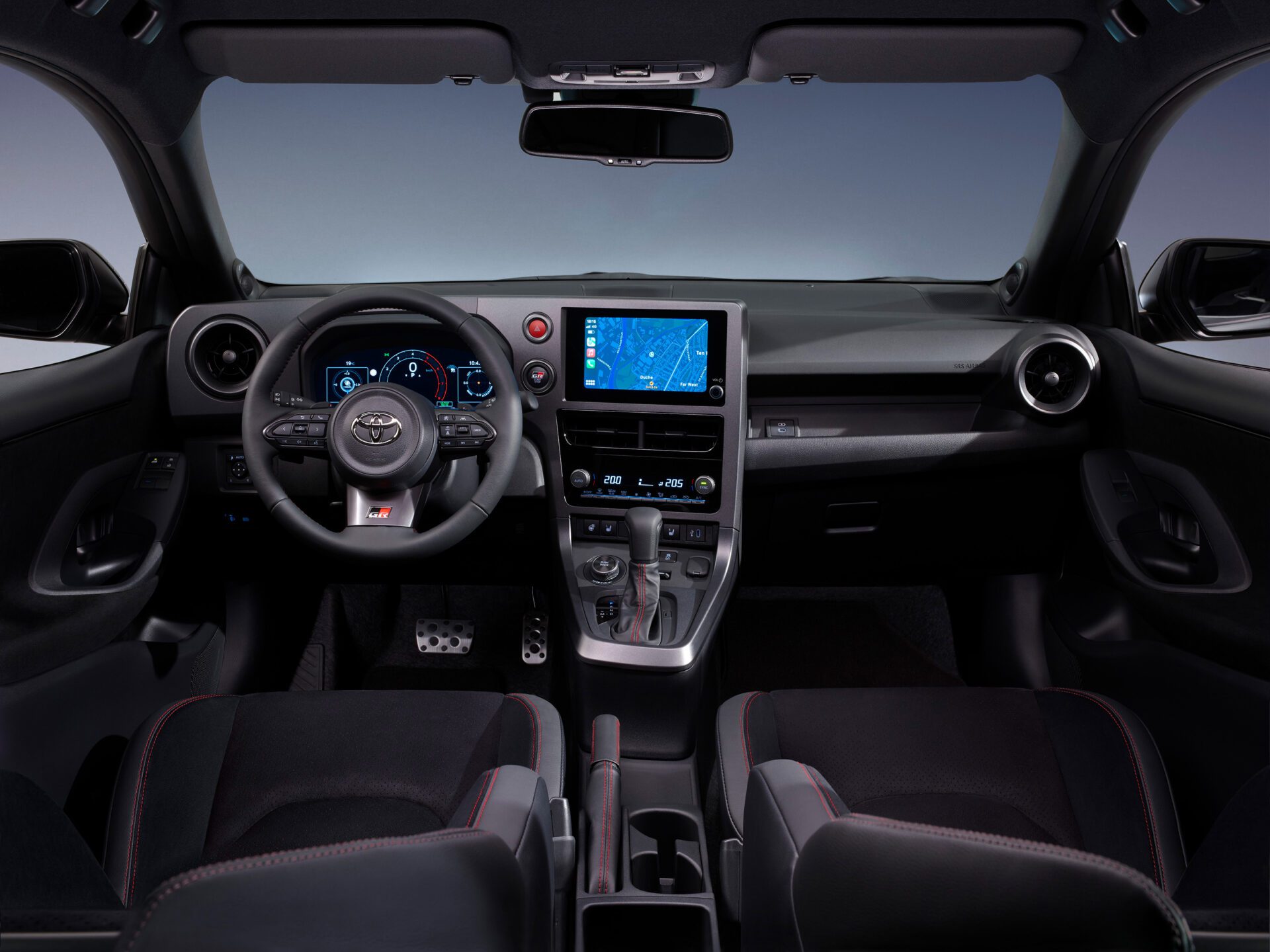
Taking a seat inside, the driving position has been lowered by 25 mm. The digital instrument binnacle measures 12.3 inches in diameter. What’s more, the dashboard has been thoroughly revised to be more driver-centric.