That’s Hyundai, now with two Ns.
Look, I’m just going to shorthand it “CONAN”, but really, this is the Kona N and with it comes my first experience in a true Hyundai performance car. No, the Tiburon absolutely doesn’t count. I also get to pilot the i30N, and at Killarney too so, chuffed! Especially since there’s nothing like a back-to-back comparison to really measure the metal.
BUT FIRST, WHY N?
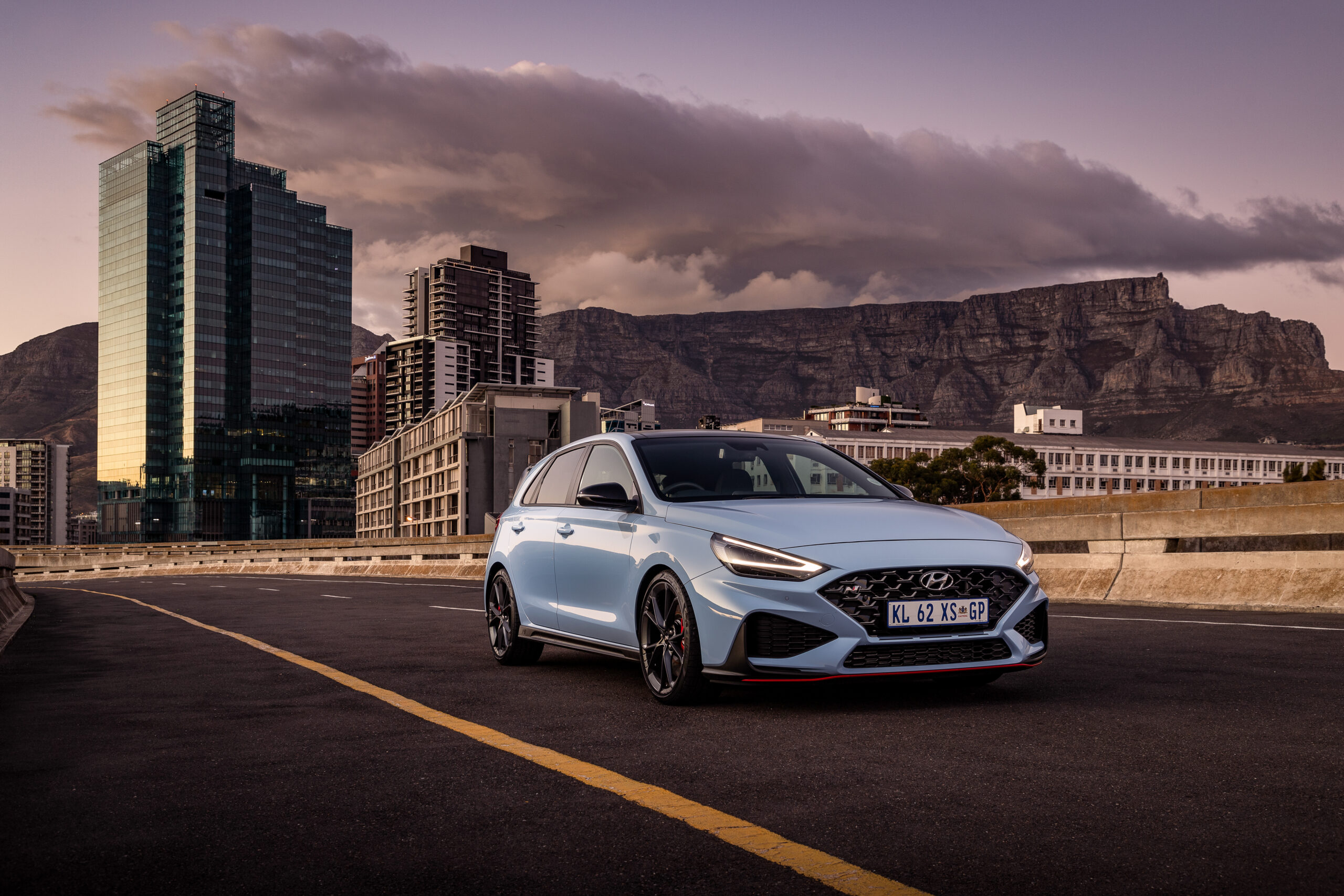
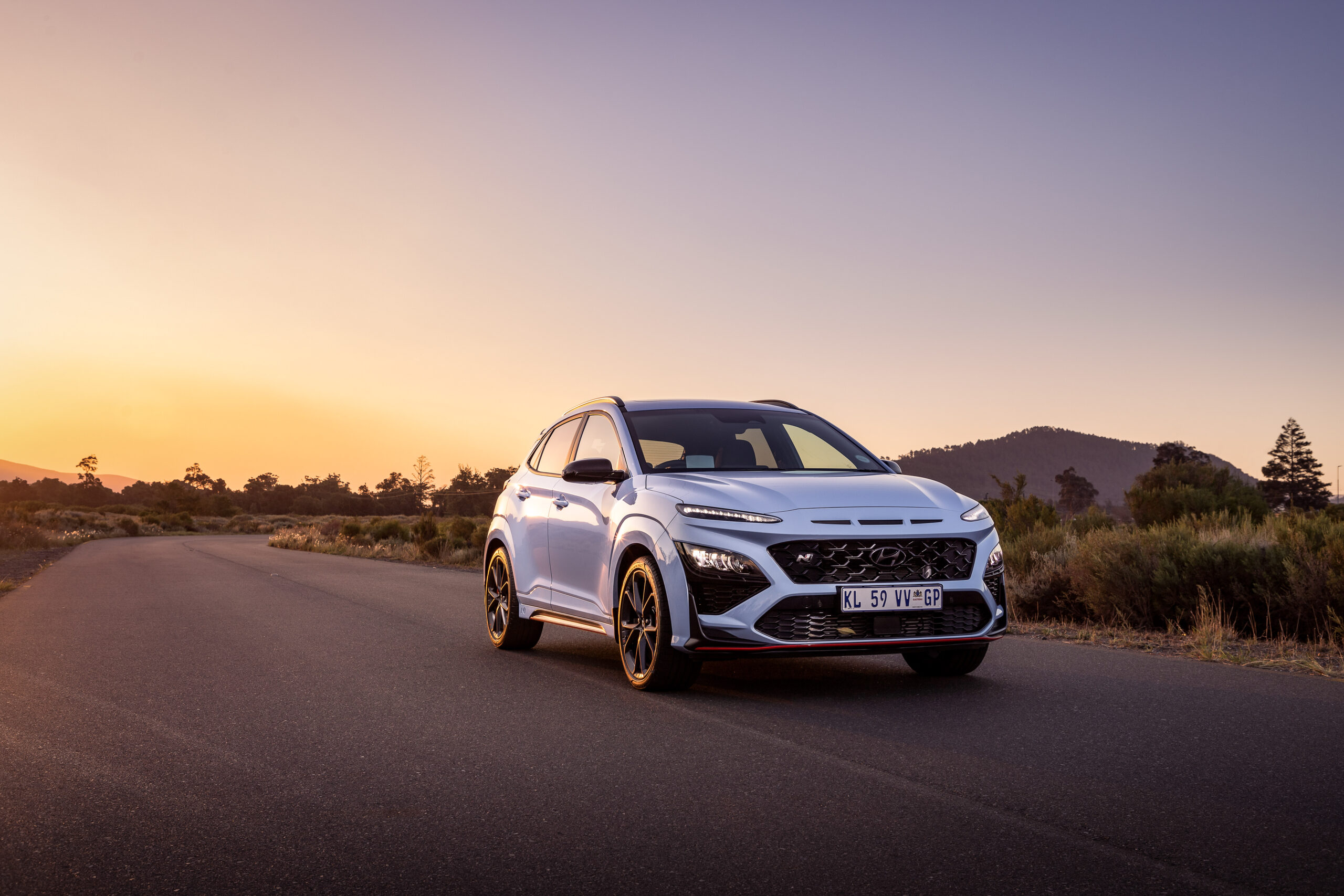
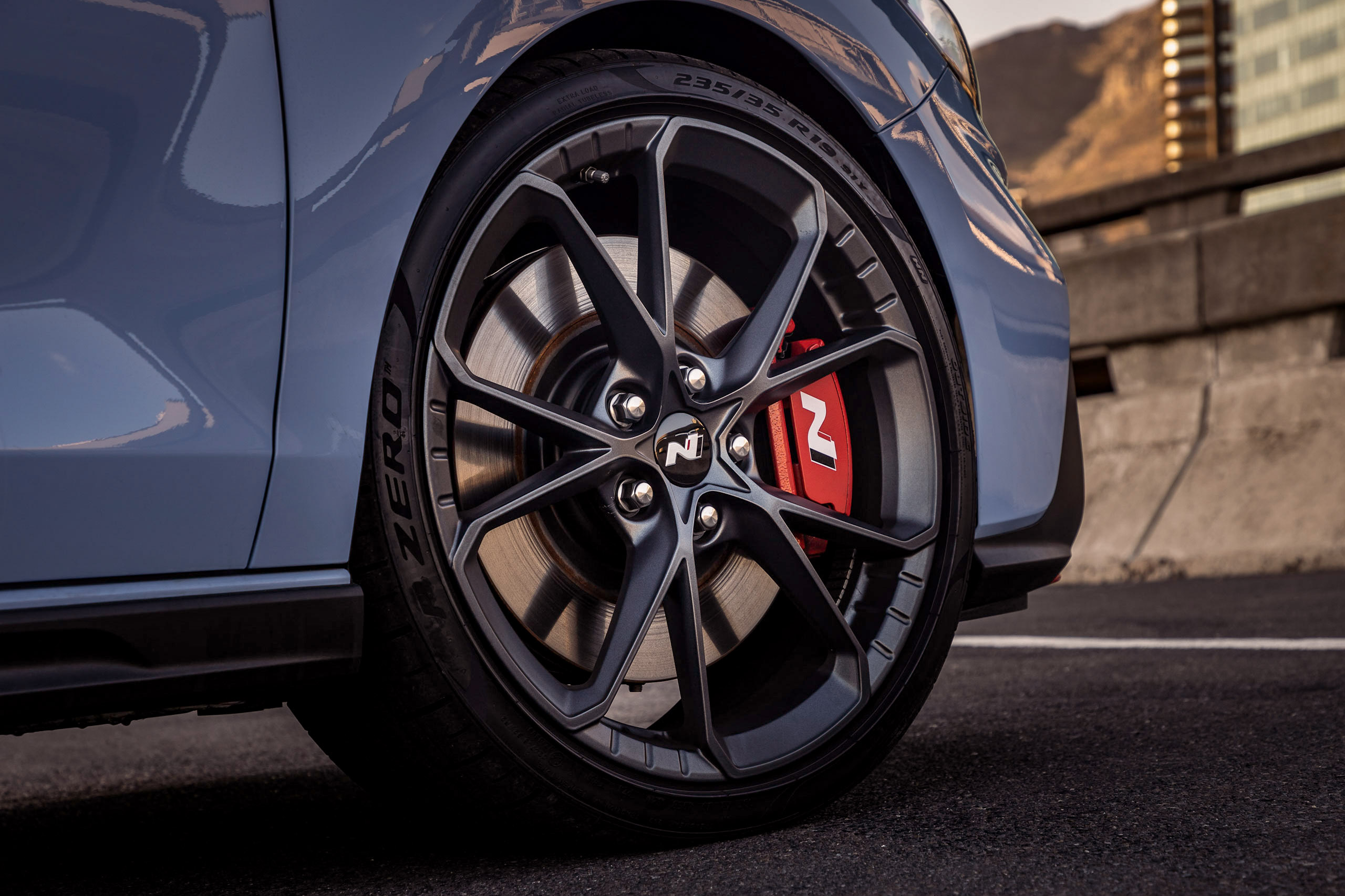
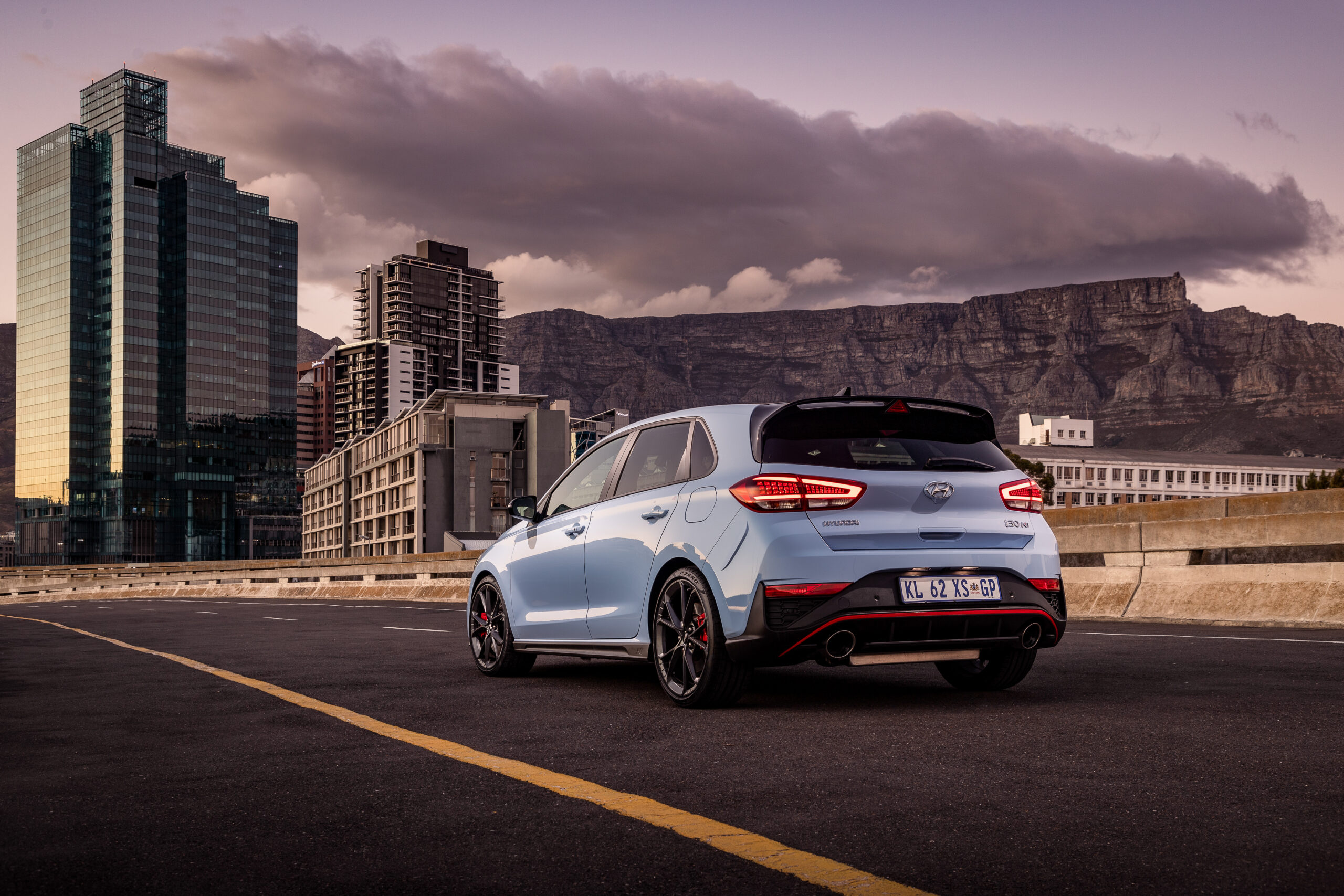
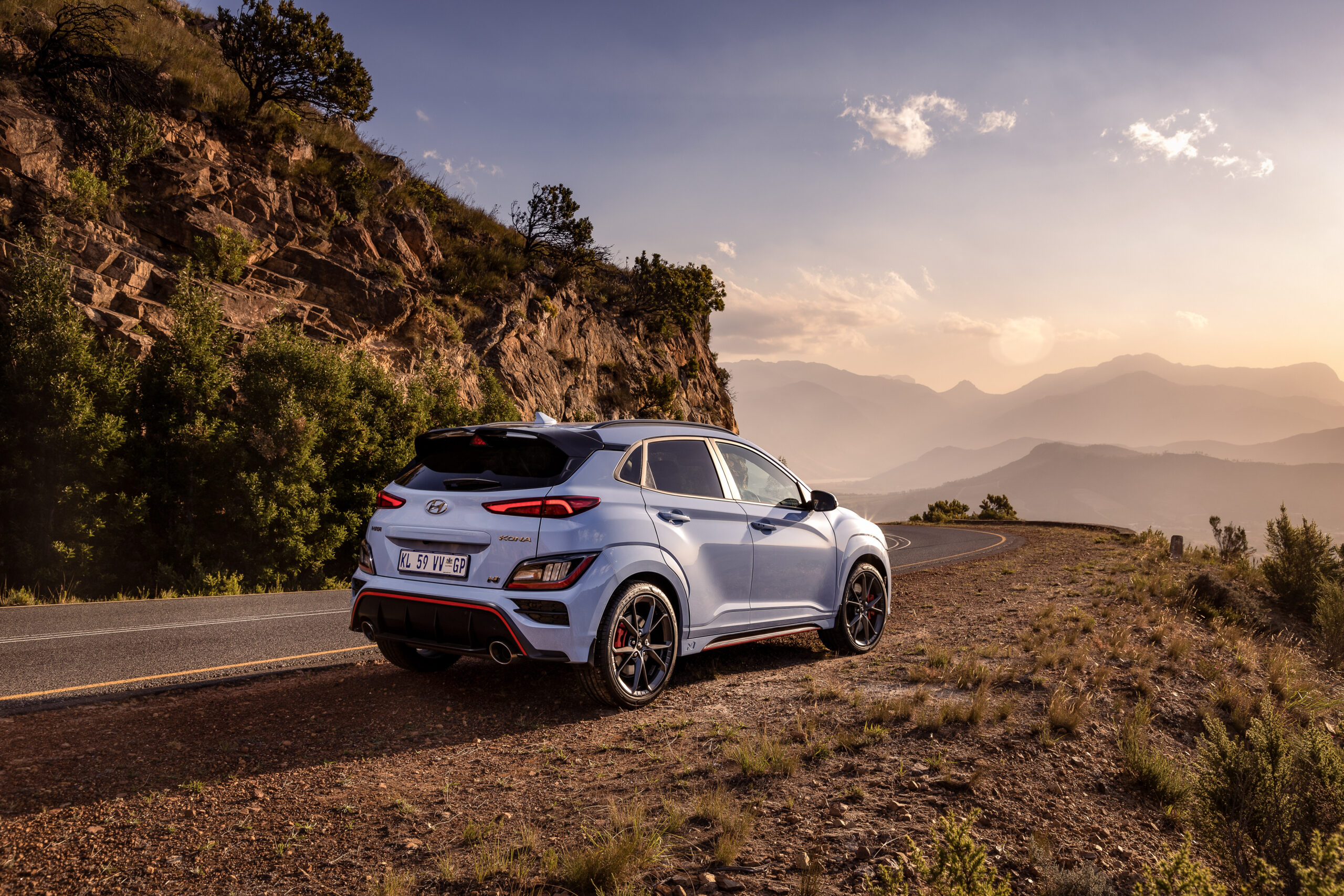
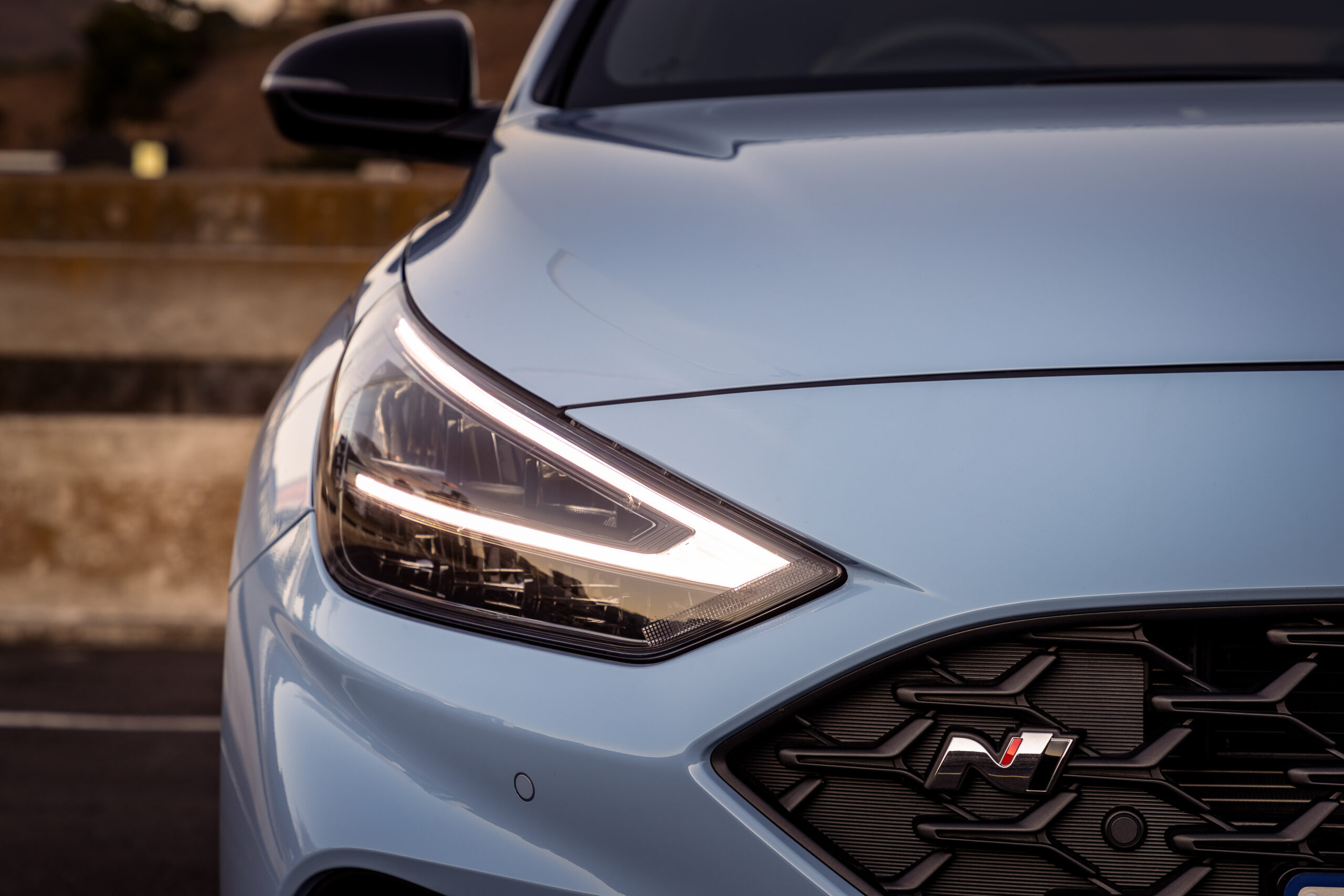
Well, N is for Namyang – where they’re made in South Korea, as well as Nurburgring where these cars are tested. Also, the shape of an N makes for a dope complex of corners, don’t you think? But first the i30N, a car I missed out on when it was initially launched in 2020. This one is the facelift – and in that regard, is quite a reskin upon closer inspection. It’s metal ‘skin’ is pulled tighter over its muscle and sinew, with bold LED lamp clusters, stronger horizontal style lines and so a more grounded stance – literally underlined with N’s red accent striping. Ditto the Kona N, side by side you can really appreciate that Hyundai are trying to give you the same experience in two formats. Also present on both cars are 19 inch forged alloy wheels, lighter and stronger than the items on the original i30N. There’s an N badge on their bums and one on their skirts, and of course a few littered in the cabin. A sunroof comes standard, which I always find odd in a performance car where rigidity is cruicial, but apparently it’s what the people want and ag, what do I know? I do however enjoy the twin-tip exhausts and the triangular stop light at the top of the rear hatch. You can have them in five colours, two of them black, but I managed to wrestle both test units in signature blue.
HOP ABOARD
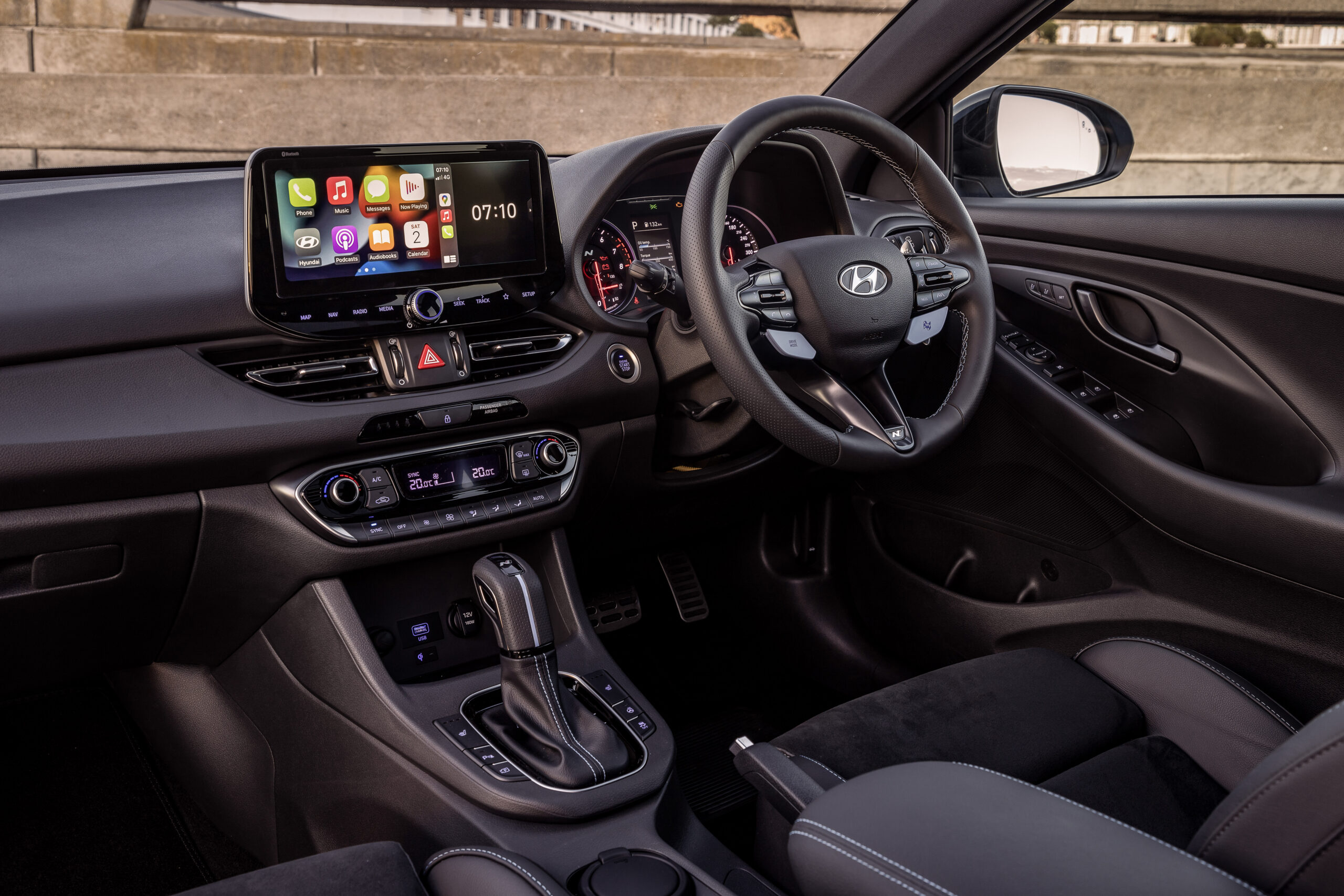
The interior feels upmarket, and where the old car had suede, the new car has combination leather. The cabin of the Kona N is similar to i30N, including the aforementioned full leather seats. Dominating the dashboard is a 10.24 inch infotainment system with Android Auto and Apple Carplay. It’s paired with a multifunction wheel, rear view monitor, wireless charger and the obligatory push button start. Also present are driving modes, electric heated seats, adaptive cruise control and lane keep assist on the Kona, but mere regular cruise control on the i30. The Kona N also gets heads up display so you could argue, is the better appointed whip.
PERFORMANCE
Let’s get down to brass tacks, shall we? Both N models boast 206kW and 392Nm from their Theta II 2,0 T-GDI engines, mated with a Smartstream 8spd, wet clutch DCT (double clutch) transmissions. Changes from the original i30N engine include larger volume turbo nozzles and as a result different pistons to lower the compression. What this all boils down to a very fine hot hatchback with blistering acceleration at 5.2seconds in the i30N and 5.3 in the Kona – especially when you consider that at the end of the day, these cars are still ‘merely’ front-wheel drive.
N IS FOR NEW TECH
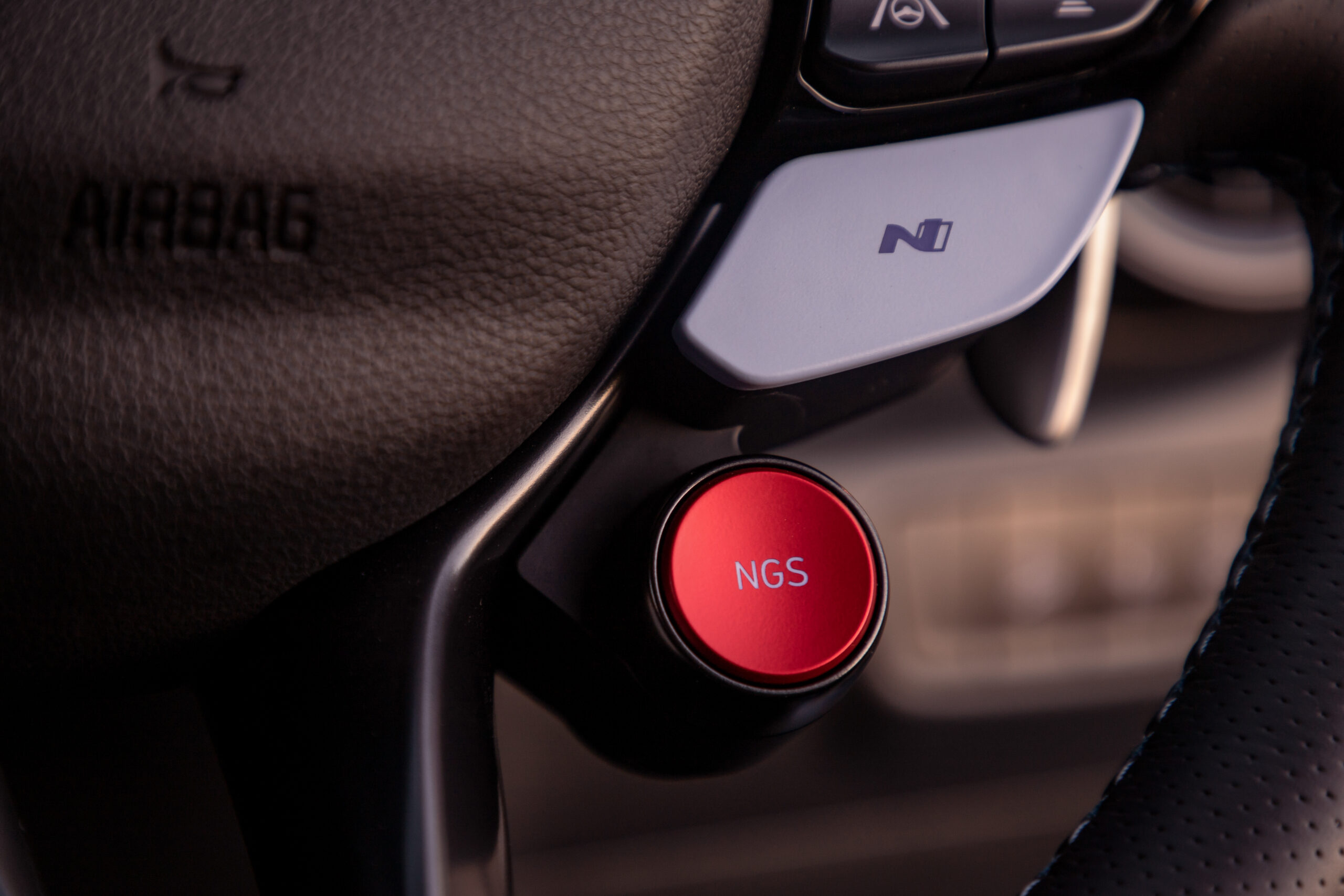
Both cars employ a range of buzzwordy technologies such as ‘N Grin Shift’ (haha, that name!) which you deploy for max power. It’s essentially overboost for 20 seconds, with a 40 second cooldown, and reduces the 0-100kph times by 0.2sec. Then there’s’ N Power Shift’ for quick progression through the cogs, ‘N Track Sense Shift’ which senses how you’re driving and acts accordingly, perfect for our stint at Killarney Raceway. Also in the mix, launch control, rev-matching and an active exhaust. The aforementioned modes include Eco, Normal and Sport, but then there’s two mappable ‘N Buttons’ also on the helm. Then add Hyundai’s ‘N Traction Control System’ with limited slip differential, and ‘N Power Sense Axle’ for better grip. I’m not done, there’s also an electronic suspension, high performance Pirelli P-Zeros in each corner and high-performance brakes.
THE PART ON TRACK
Semantics, here’s some more – the i30N weighs 1455kg versus the 1510kg Kona N, and naturally, has a lower centre of gravity and driving position despite having more ground clearance than its predecessor. Charging at the first corner at Killarney revealed dramatic acceleration, biting braking and confident poise from entrance to exit, with granular feedback from the front wheels. But the i30N instantly felt quicker, it’s suspension more firm and ready to attack. Some of this is quite subjective, especially since I went into it expecting the hatch to trump the quasi-crossover (and so it did). Turn two was more of the same, despite the circuit being dissected with bollards for some bonus chicanes. The entire ordeal showed up both cars’ talents and there are ‘a lot’. These are brilliant, well equipped performance machines born to bloody the noses of VW Golf GTIs. I’m not being contentious or meaning to be frivolous. That’s its job. N cars are born from Hyundai’s desire to make the best 2WD hot hatchback on the market despite being mostly bereft of legacy or heritage in this department. And what they’ve oroduced is something that doesn’t need to be shy here, because it can hold its own against anything thats come before. Really.
For R749,900 you can have either N car, with Hyundai’s fantastic 7 year/200,000km warranty and lauded motorplan and after sales. Which is hardly cheap, but also a performance bargain.